



SP2014MC8MP1B
- Focal Length
- 20 mm
- Sensor Format
- 1"
- Mount
- C-Mount
- Iris
- Manual Iris
- Rated Resolution
- 8 MP
- F-Number
- f/1.4
SUPERIOR OPTICS / CATEGORY
Machine vision lenses project an inspection scene onto an industrial camera sensor for tasks such as detection, identification, and measurement. SUPERIOR helps buyers evaluate image circle, pixel size, working distance, field of view, and MTF so lens selection follows the required inspection detail and integration conditions rather than resolution labels alone.
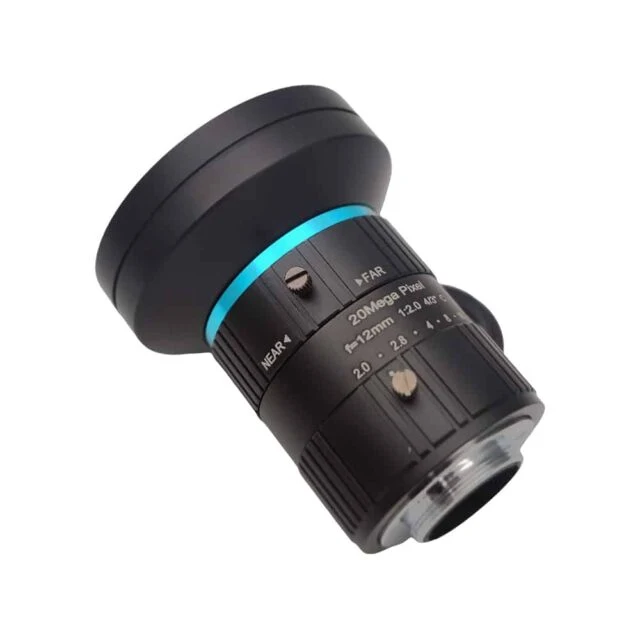
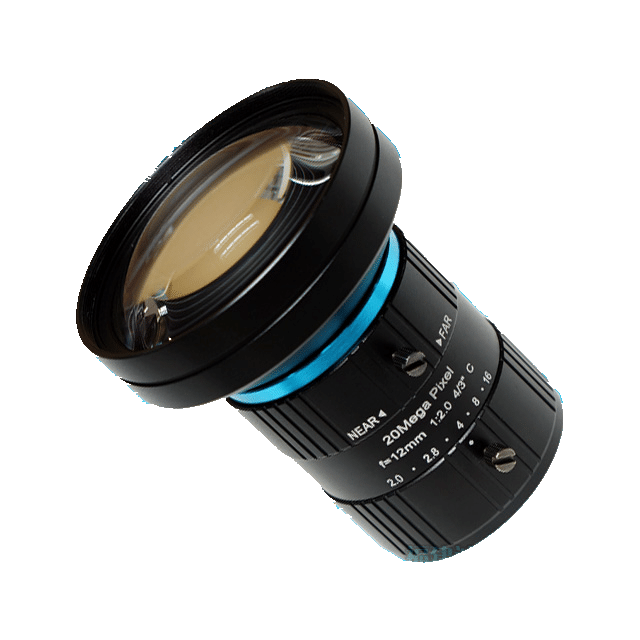
3 matching models

| Part Number | Focal Length | F/No. | Format Size | Mount | Iris Control | Dimensions (diameter x length) | Inquiry |
|---|---|---|---|---|---|---|---|
| SP2014MC8MP1B | 20mm | f/1.4 | 1" | C-Mount | Manual Iris | — | Request a Quote |
| SP2514MC10MP1 | 25mm | f/1.4 | 1" | C-Mount | Fixed Iris | — | Request a Quote |
| SP1220MC20MP43B | 12mm | f/2 | 4/3" | C-Mount | Manual Iris | — | Request a Quote |
Use these illustrative inputs to prepare your lens selection brief. This checklist is not a model specification or an interactive product filter. Confirm all values against the selected model data sheet, or request engineering selection support.
| Parameter | Selection example / input | Verification required |
|---|---|---|
| Sensor | Example: 1-inch format, 3.45 micrometre pixel pitch | Use the camera active width, height and diagonal. |
| Field of view | Example: 80 mm horizontal inspection width | Include the smallest feature and required sampling. |
| Working distance | Example: 250 mm from the specified lens reference | Confirm the reference datum and available clearance. |
| Focal length and aperture | Example: 25 mm, f/4 evaluation | Recalculate for the chosen camera and working geometry. |
| MTF acceptance | Project target at stated field points and spatial frequencies | State aperture, wavelength, distance and focus conditions. |
Match the optical design and coating to the operating wavelength range. Define the illumination band, then review focus and image contrast under the conditions intended for your camera project.
Match image-circle coverage to the InGaAs sensor size and pixel pitch. Check edge contrast, vignetting and target detail at the required working distance, aperture and camera settings.
Request a model-specific transmission curve for the agreed wavelength band. Check test conditions, filters and protective windows before comparing lens options and planning camera trials.
Test sample materials under the planned lighting and exposure. Check contrast at the required inspection speed, then agree sample criteria before choosing a lens for production.
For industrial inspection, the acceptance plan should identify sensor, target, illumination, distance, aperture, and center-to-edge criteria. Request relevant MTF or camera-image evidence and drawings for focus and iris retention. Define sampling and dimensional checks for production; measurement accuracy must be evaluated at system level, including calibration, lighting, mechanics, and software.
Request relevant drawings, test conditions and project-specific inspection evidence.
Camera specifications help define the imaging requirements for machine vision lenses selection. EMVA 1288 provides a framework for characterizing machine-vision sensors and cameras. Use the camera manufacturer’s published data alongside lens-specific checks for sensor coverage, chief ray angle and image quality.
Match lens performance to the inspection task, camera sensor and installation space.

Inspect visible surface defects, part presence and printed features. Match field of view, smallest target detail and illumination to the camera sensor, exposure and production speed.
Discuss Inspection Requirements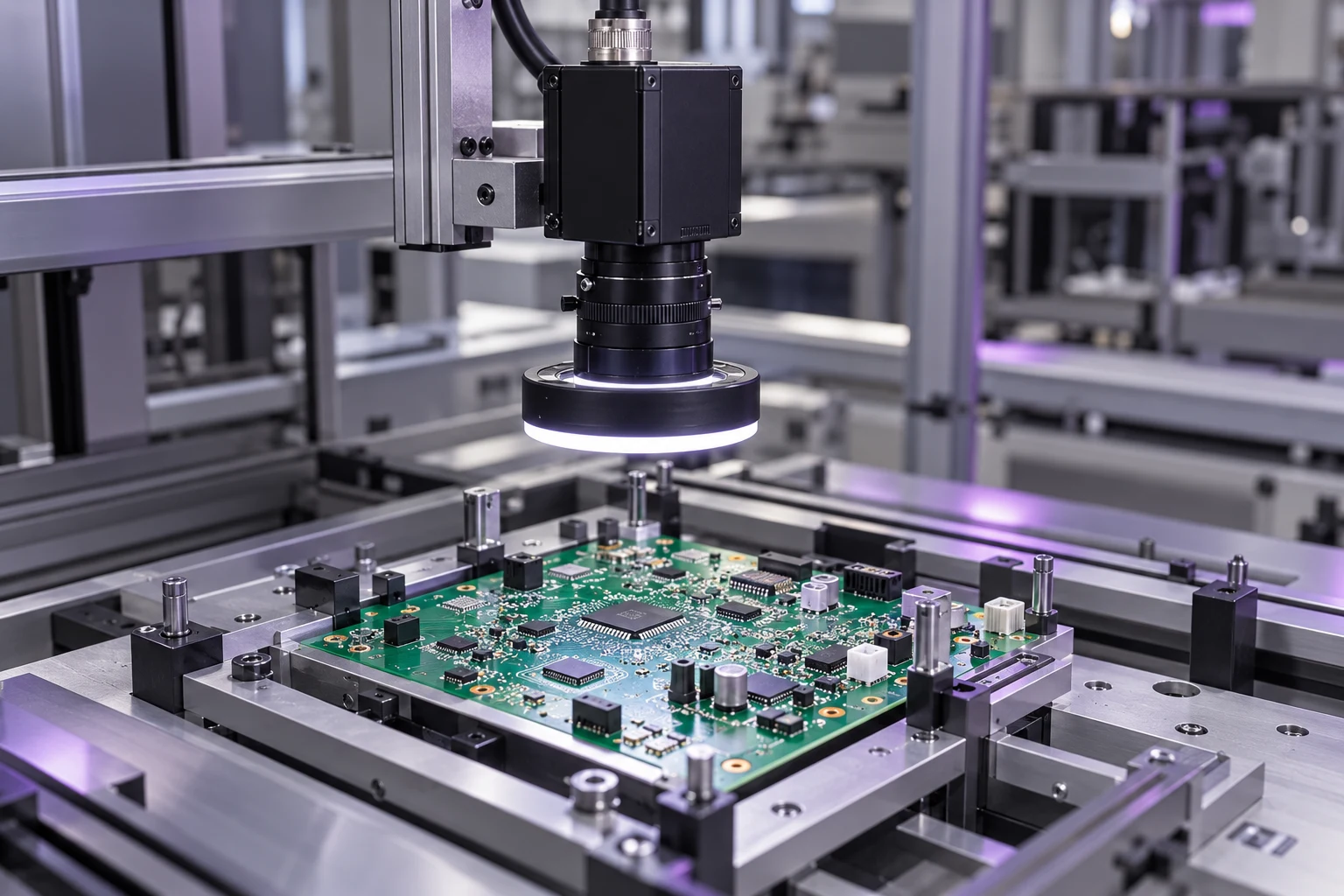
Check component presence, orientation and assembly features on boards or small parts. Balance sensor coverage, working distance and edge detail, then evaluate representative samples under the planned lighting.
Discuss Assembly Inspection
Locate parts and review their orientation before robotic handling. Define the field of view, working distance and position variation; assess distortion, calibration and mounting stability as a complete vision system.
Discuss Robot VisionIllustrative application scenes.
Compare related lenses, review selection guidance or discuss a custom camera requirement.
Review telecentric optics for dimensional measurement. Compare magnification, sensor coverage and working distance before evaluation.
Browse Telecentric LensesReview field of view, sensor matching, distortion and MTF when comparing lenses for industrial imaging tasks.
Read Selection GuidesDiscuss optical targets, mechanical interfaces, sample evaluation and production requirements.
Discuss OEM / ODMBUYER QUESTIONS
Answers to common selection and project questions.
Specify the camera pixel pitch and required contrast at the spatial frequencies relevant to the inspection. Compare performance at the intended aperture, wavelength, working distance, and field positions rather than relying only on a megapixel rating.
No. Image circle establishes coverage, but corner contrast, distortion, relative illumination, focus, and mechanical clearance still matter. Evaluate the whole field using the intended camera and inspection conditions.
Consider it when perspective-related size changes affect dimensional measurements and the object varies in depth or position. Confirm field of view, magnification, working distance, and the complete measurement error budget before choosing a design.
Send camera and sensor data, inspection width, smallest feature, available distance, illumination, aperture constraints, environmental conditions, sample quantity, and annual volume. Include a drawing or representative scene where possible.
PROJECT INQUIRY
Turn your inspection requirement into a lens specification. Send the camera model, field of view, working distance, smallest defect, illumination, and production volume for an engineering review and quote.
Include a model number or the information currently available:
You do not need a complete optical specification to start. Send the information currently available, along with your delivery destination and preferred schedule.