


Quartz vs. Glass: Why Your Standard Lens is Blocking UV Light
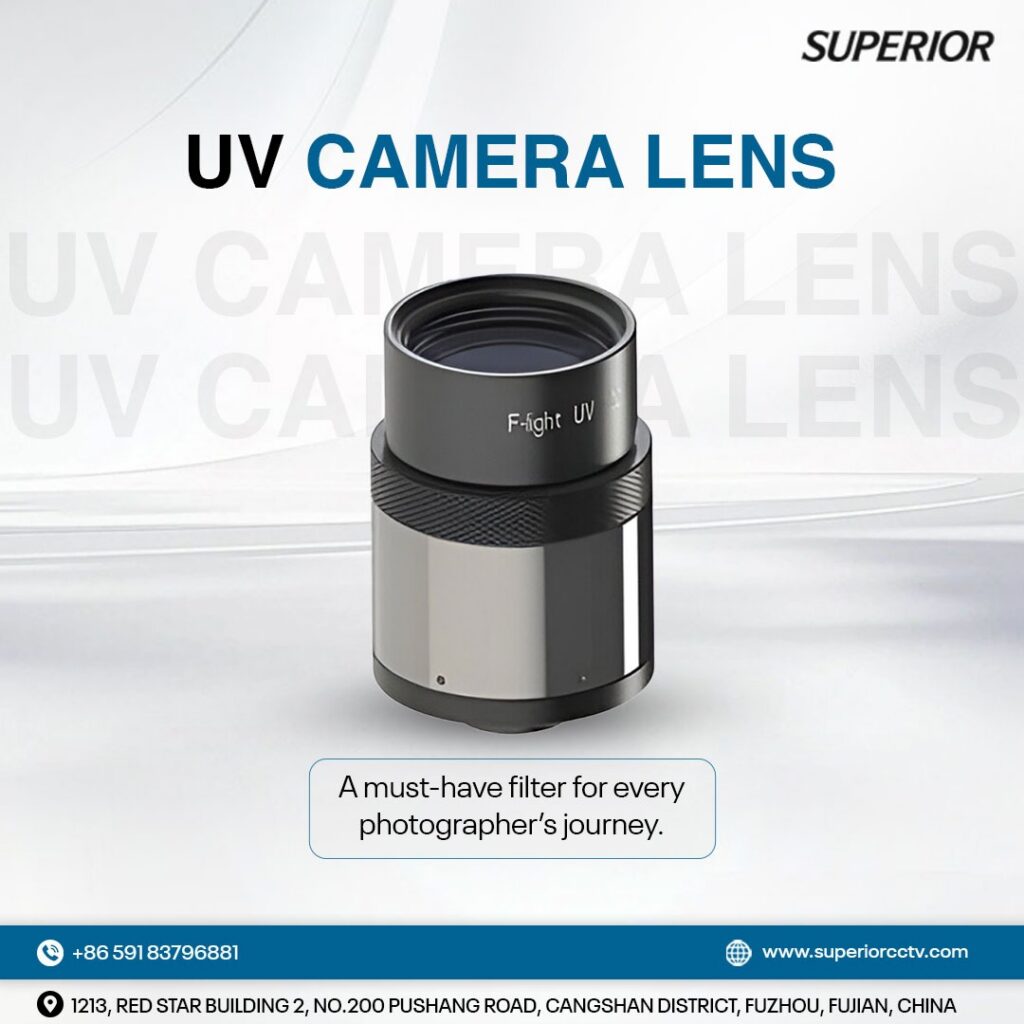
Everything we see carries a wide range of colors, and what we can see with our eyes is only a fraction of that spectrum. The UV camera lens is used to capture spectra and light while imaging and monitoring spaces. However, the truth is that even UV lenses compromise image quality if specialized materials are not used. Most users assume that installing a high-quality lens works for all types of light and in all solutions, but it’s not true. The use of standard glass or quartz lenses affects it to the extreme, altering its light-capturing capability and overall performance.
The standard glass acts like a “brick wall” to ultraviolet wavelengths, and its use in the UV camera lens significantly affects the performance. Therefore, specialized UV lenses are becoming a necessity for applications that capture data beyond the 400nm range. This blog post will explain why a dedicated UV camera is the only way to achieve clear ultraviolet imaging without compromising quality, clarity, or light.
Reason Why Standard Glasses Don’t Qualify For UV
The typical optical glasses contain impurities and lead that absorb UV radiation, converting it into heat rather than letting it pass through. Standard glasses absorb UV radiation through various mechanisms, including UV absorbers incorporated into the lens material and anti-reflective coatings on the reverse side. A UV CCTV lens is hindered in its ability to capture when it absorbs UV light through either dark or coated material.
- Dark lenses absorb most of UV-A radiation, while coated lenses can absorb a significant portion of UV-B radiation, but not all UV-A.
- The standard lens material hindered the traditions up to 400 nm, as defined by the WHO.
- Clear lenses typically absorb only a limited portion of UV light, leaving a significant portion of the UV spectrum unabsorbed.
Most lenses used for visible light, like standard lenses, have a coating that intentionally blocks light falling on the UV lens. Thus, it prevents “haze” in normal photos, making it useless for UV-specific applications. It makes the use of the right material vital for the desired UV-captured imaging. Without the robust material, the sensor receives no signal, leading to black or muddy images regardless of how powerful your light source is.
Comparisons: Quartz/ Fused Silica vs. Optical Glass
To achieve clarity in the ultraviolet range, the finest material is required. Therefore, it is vital to replace the optical lens material from standard glass with fused silica or Calcium Fluoride. These materials exhibit a unique molecular structure that allows shorter wavelengths to pass through without being scattered or absorbed.
When choosing your pick among a UV Camera lens, a high-performing lens under these building limitations, or an effective ultraviolet camera system.
| Feature | Standard Optical Glass | Fused Silica (Quartz) / Fluorite |
|---|---|---|
| Spectral Transmission | 400nm – 2,000nm (Visible + IR) | 180nm – 2,100nm (Deep UV to IR) |
| UV Efficiency | Poor: Blocks nearly all UV-B and UV-C light. | Excellent: High transparency for specialized UV imaging. |
| Thermal Stability | Expands/contracts with heat; prone to “focus drift.” | Extremely stable; resistant to high-heat industrial environments. |
| Chromatic Aberration | High distortion when focusing UV light. | Superior color correction and sharpness in the UV spectrum. |
| Solarization Resistance | Low: Glass can turn brown or “cloudy” after heavy UV exposure. | High: Maintains crystal clarity even after years of UV use. |
| Surface Precision | Mass-produced for general consumer use. | Highly polished to meet UV camera lens tolerances. |
| Primary Use Case | Standard CCTV lens security setups. | Specialized UV camera inspection and forensic analysis. |
By choosing and using a silica-based UV camera, researchers and engineers can capture crisp details in the 200nm to 400nm range. This optimization physically outperforms the most expensive standard glass optics, which has been impossible so far.
A System-Wide Approach to Matching the Lens to the Sensors
The robust material of the ultraviolet lenses is paramount. But achieving high transmission, low absorption, and accurate spectral response with long durability is equally important for ultraviolet imagery. It isn’t just the work of swapping out the lens, but it requires a complete “system-wide” understanding of light interactions with hardware. It’s the work of the sensor that matters, which can’t even be compensated for with the most expensive optics. If it’s not designed for the ultraviolet spectrum.
However, as noted above, a traditional CMOS/CCD digital camera will incorporate a “UV-cut filter” that prevents UV light from reaching the sensor, since it can cause blurring or make photos look somewhat blue when used for visible-light photography. In addition, the microlenses and the color filters (a Bayer pattern) on such sensors are often made of the same material as glass, which absorbs UV light before it even gets to silicon.
To achieve maximum performance, it is essential to use a specialized sensor with the UV CCTV lens. This type of sensor may be called “back-thinned” or “back-illuminated” (BSI). The reason is that in such sensors, the electronic circuits that normally intercept incident light are stripped away, thus allowing the UV photons to reach the photosites directly.
The “Bottleneck” Effect:
If you try to use your typical security camera with a quartz lens, then the camera filters will automatically ignore the information sent by the lens. Similarly, a highly sensitive ultraviolet camera placed behind an ordinary lens would serve little purpose, since the lens would block all the light from reaching the sensor.
For accurate results, especially in industries like semiconductors or botany, the entire process needs to be seamlessly linked from one end to another. It means that every single part, including the special light source, a highly advanced camera lens, and the sensor itself, should be compatible with each other for the best results. Otherwise, the important features would never get highlighted.
Concluding Here!
For security purposes, CCTV needs effective lenses for monitoring and other precision tasks. A UV camera lens swoops in perfectly because its features and properties are more advanced than those of simpler lenses. Its uses range from night vision to specialized surveillance, vital for detecting hidden details, penetrating haze, and supporting forensic analysis. Talking about material, while the glass is fine for the human eye, it fails the test of ultraviolet physics. Therefore, if your project demands forensic details, corona detection, or material analysis, a standard lens is a bottleneck.
Making it essential to invest in a high-quality UV camera lens ensures you aren’t leaving half of the available data in the dark. Additionally, the setup plays a crucial role, as an unprofessional setup can degrade the value of a strong camera. Having the support team available after purchase to help with installations and provide guidance can be a real catch for an optics manufacturer and supplier. If you’re looking for a trusted lens manufacturer, then look no further than SuperiorCCTV. We are the most reliable manufacturer in the market, with years of experience that have made us the top ones.
FAQs
Q.1: Can I use a standard UV filter on a normal lens to get UV images?
Ans: No. A UV filter standard lens is usually designed to block UV light and improve visible-light clarity. To capture an image in the UV spectrum, you need the opposite: a lens made of fused silica for enhanced performance and features. It allows UV to pass through to the sensor.
Q.2: Is a UV camera lens more fragile than a standard glass lens?
Ans: The material used in the ultraviolet camera lens is Quartz and fluorite, which are usually durable and have excellent thermal properties. However, they are sensitive to certain cleaning chemicals and physical impacts, requiring specialized handling compared to a common glass lens.
Q.3: Does SuperiorCCTV offer technical consultations for custom imaging projects?
Ans: Yes. SuperiorCCTV services go beyond hardware supply. Our engineering team offers specialized consultation to help you determine the exact spectral requirements for your specific industrial or research applications.
Q.4: Can we provide bulk-order discounts for large-scale security deployments?
Ans: Absolutely. We provide tiered pricing structures for commercial contractors and government agencies ordering high-grade equipment in bulk. At the same time. We are all equipped to outfit large facilities with consistent, high-grade optical equipment. Contact us through our websites to get in touch with our support team, which can explain things in detail to meet your requirements.
Q.5: How does SuperiorCCTV handle warrants and calibration for specialized lenses?
Ans: Each of our precision lenses comes with a standard manufacturer’s warranty, and we also offer in-house verification services. It helps us ensure your equipment is calibrated to the specific wavelength peaks required for your projects.
Related Articles
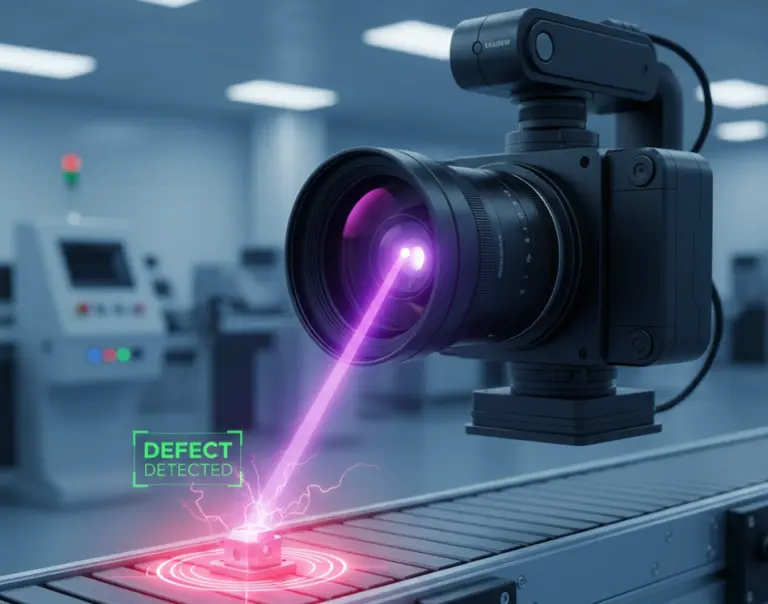
Watch Beyond Visible Spectrum: UV Camera Lens For Industrial Inspection
5 min read
The Benefits and Challenges of Using UV Lenses
3 min read
UV Lenses To Drive The Future
4 min readAbout SUPERIOR OPTICS
SUPERIOR OPTICS specializes in CCTV lenses, machine vision optics, and custom optical solutions for security, industrial imaging, and specialty applications. We also provide professional lens selection and application support.