

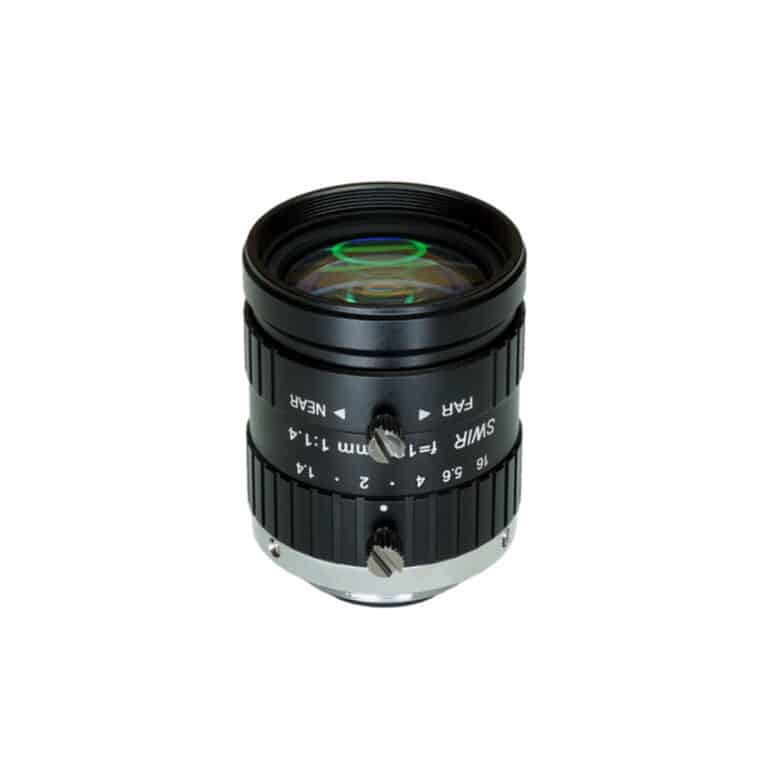
SP-SWIR12514MC
- Focal Length
- 12.5 mm
- Sensor Format
- Ø13 mm (Image Circle)
- Mount
- C-Mount
- Iris
- Manual Iris
- F-Number
- f/1.4
- Rated Wavelength
- 900–1700 nm
SUPERIOR OPTICS / SWIR LENS SERIES
SWIR lenses focus short-wave infrared light onto a compatible sensor, with optical materials, correction, and coatings selected for a specified wavelength range. SUPERIOR reviews InGaAs sensor dimensions, pixel pitch, spectral transmission, working distance, and illumination so buyers can assess a lens for the intended inspection or camera integration task.
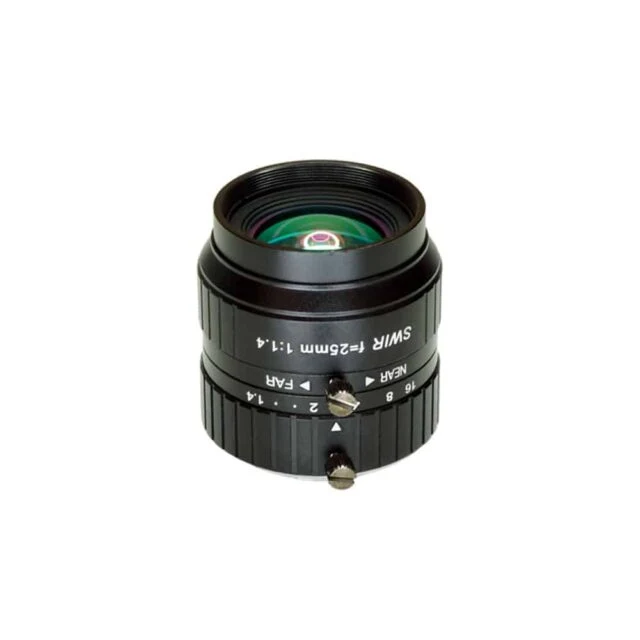
6 matching models
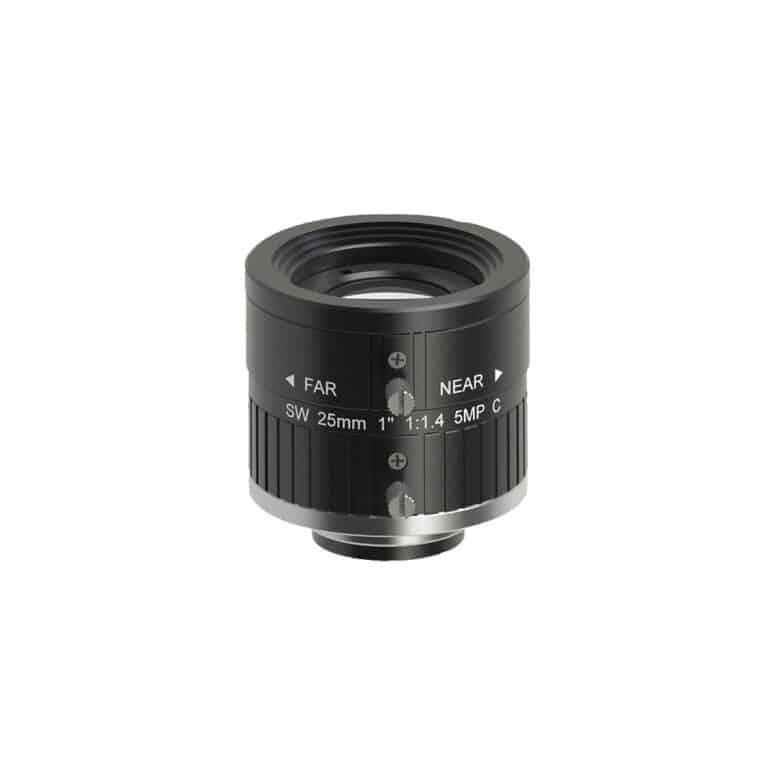
Review the product data sheet or request model-specific specifications.

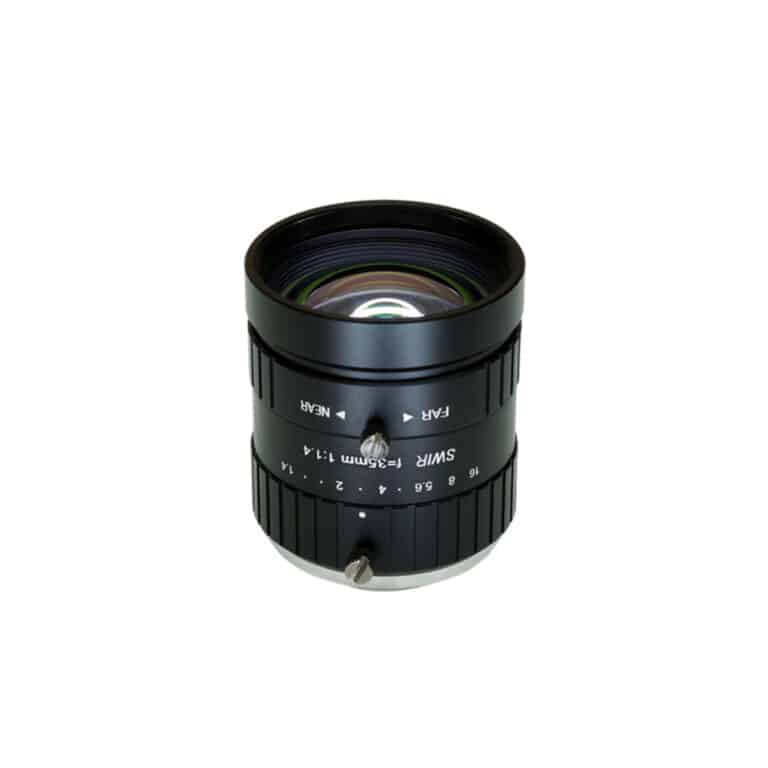
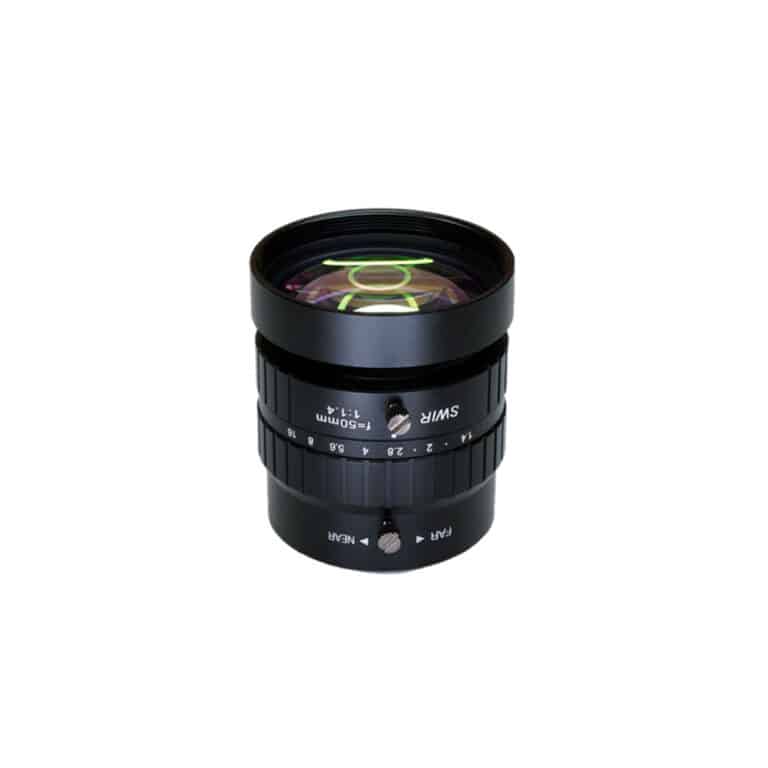
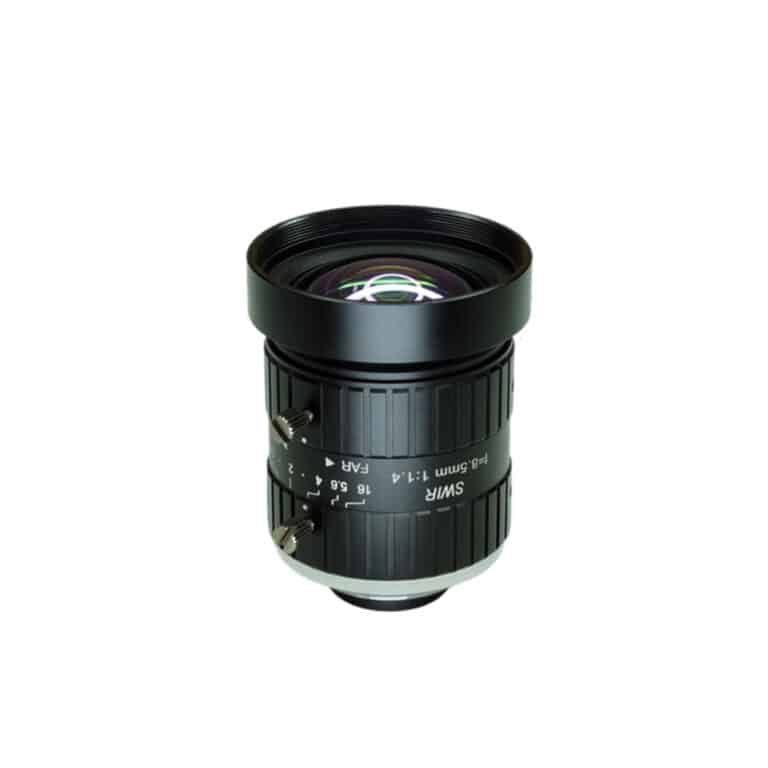
Use these illustrative inputs to prepare your lens selection brief. This checklist is not a model specification or an interactive product filter. Confirm all values against the selected model data sheet, or request engineering selection support.
| Parameter | Selection example / input | Verification required |
|---|---|---|
| Wavelength range | Example evaluation band: 900-1,700 nm | Confirm the selected lens and sensor response across the required band. |
| Sensor and coverage | Example: InGaAs sensor with 12.8 mm active diagonal | Check image circle and field performance. |
| Focal length and aperture | Example: 25 mm at f/2.8 evaluation | Verify coverage, signal and focus at the working distance. |
| Spectral transmission | Project-defined curve or band-weighted target | State wavelength sampling, test method and coating conditions. |
| Mechanical interface | Example: C-mount with a specified filter stack | Review flange distance, rear clearance and focus adjustment. |
Compare SWIR lenses against your sensor response and illumination band. Review the stated operating wavelengths, optical design and available coating information for the contrast required by your application.
Match image-circle coverage to the selected sensor dimensions and pixel pitch. Evaluate center and corner detail, distortion and illumination uniformity at the intended working distance and aperture.
Evaluate representative materials under the planned illumination or excitation method. Include filters, protective windows and exposure settings when comparing image contrast for sorting, inspection or process observation.
Review the mount, rear clearance, focus adjustment and housing requirements for your SWIR camera. Confirm sample acceptance criteria and any modification feasibility before approving the production configuration.
SWIR lenses evaluation require optical and mechanical checks under the intended spectral and installation conditions. Define the sensor, illumination band, working distance and acceptance criteria, then request applicable drawings, sample images and inspection records before production approval.
Assess center and corner image quality, distortion and illumination uniformity with the intended SWIR sensor and operating band. Where transmission is critical, request model-specific spectral data and test conditions; do not infer transmission from a nominal wavelength range.
Check the mount, flange distance where applicable, barrel dimensions and rear clearance against the approved drawing. Include filter stacks, protective windows and camera housing constraints when reviewing sensor placement and installation space.
Verify focus and image alignment using the planned working distance, illumination or excitation method and filter configuration. Agree on focus retention and repeatability requirements; arrange environmental evaluation where the application requires it.
Confirm model identification, approved specification revision, appearance and packaging against agreed requirements. Request applicable inspection records and batch identification, and agree on any additional optical or environmental checks before a volume order.
Request relevant drawings, test conditions and project-specific inspection evidence.
Camera specifications help define the imaging requirements for SWIR lenses selection. EMVA 1288 provides a framework for characterizing machine-vision sensors and cameras. Use the camera manufacturer’s published data alongside lens-specific checks for sensor coverage, chief ray angle and image quality.
Typical application directions for SWIR lens selection.

Assess moisture-related contrast and foreign-material inspection. Match illumination, sensor coverage and exposure to the produce, grain and required target detail.
Discuss Food Inspection
Review silicon transmission or solar-cell electroluminescence imaging. Select wavelength, magnification and image quality for material thickness and the required defect size.
Discuss Semiconductor Imaging
Evaluate hot-metal process imaging with suitable exposure, filters and stand-off distance. Confirm protective-window requirements, shielding and the lens operating-temperature limits.
Discuss Process ObservationIllustrative application scenes.
Compare related lenses, review selection guidance or discuss a custom requirement.
Compare related imaging lenses by sensor coverage, focal length and working distance.
Browse Lens ModelsReview sensor matching, field of view, illumination and optical performance for your project.
Read Selection GuidesDiscuss optical targets, mechanical interfaces, sample evaluation and production requirements.
Discuss OEM / ODMBUYER QUESTIONS
Answers to common selection and project questions.
It may not. Transmission, coatings, chromatic correction, and sensor coverage can differ substantially. Request evidence at the required wavelengths and evaluate image quality on the intended SWIR camera.
No. SWIR definitions and product correction bands vary. Specify the actual wavelength interval, illumination spectrum, sensor response, and acceptable focus and transmission behavior for the selected assembly.
A lens alone cannot provide a temperature measurement. Quantitative thermometry requires an appropriate sensor, spectral band, calibration, emissivity assumptions, and controlled system conditions. Discuss the full measurement arrangement before specifying optics.
Send sensor dimensions and pixel pitch, wavelength range, field of view, working distance, illumination, transmission requirements, operating environment, sample quantity, and forecast volume. Include representative material samples or images when available.
PROJECT INQUIRY
Define the spectral requirement first. Send the sensor, wavelength range, illumination, imaging geometry, and sample material details to request a SWIR lens review and quotation.
Include a model number or the information currently available:
You do not need a complete optical specification to start. Send the information currently available, along with your delivery destination and preferred schedule.