
In all kinds of telecentric imaging, where measurements are to be performed on the image or its corresponding, it is significant to eliminate systematic sources of error. One such is that the magnification of a telecentric imaging lens in an ordinary imaging system depends non-linearly on the subject distance. Furthermore, telecentric lenses transform automated visual inspection by removing parallax and perspective errors. Nevertheless, it significantly improves precision and repeatability.
CCTV lens manufacturers and quality teams depend on these lenses to embark on precise measurements, particularly when analysing small elements such as fine-pitch Ball Grid Array (BGA) at 0.4mm. Nevertheless, in many machine-vision systems, such as those utilized in semiconductor inspection, accurate repeatable perspective measurements must be made invariably. To ensure this happens, system developers must turn to more expensive visual systems based on a telecentric imaging lens to image these elements.
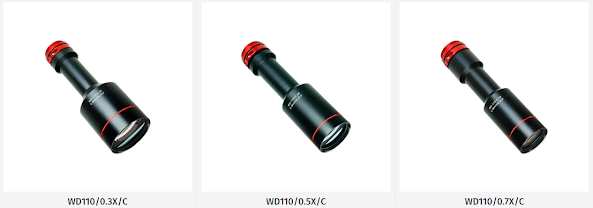
Seeing the Unseen: Redefining Precision with Telecentric Lens Technology
Moreover, there are various reasons why you should consider choosing a telecentric industrial cameras lens that appear from the constraints of more traditional lens systems. The elimination of perspective error in imaging makes telecentric imaging imperative for defect detection, stable outcomes in automated visual production, and assured quality checks. However, in this comprehensive guide, we will discuss the fundamental ways a telecentric automotive camera lens eliminates perspective errors in imaging.
What are Telecentric Imaging Lenses?
Telecentric imaging lens specialized optical elements that eliminate perspective distortion (parallax) by maintaining magnification stability regardless of object distance. Thus, it is imperative for high-precision machine vision, metrology, and gauging when 2D measurements are required. Additionally, their exceptional design ensures chief rays (light rays from the entity’s edge) are perpendicular to the optical axis. Likewise, it ensures that objects do not appear larger when closer and smaller when farther away, unlike traditional lenses.
Key Features of Telecentric Imaging Lenses
- It offers constant magnification.
- It helps in reducing perspective distortion.
- It consists of a high depth of field.
- It offers precise edge detection.
- It has insensitivity to object position uncertainty.
Advantages of Telecentric Imaging Lenses
- Elimination of Parallax
- High Resolution
- Improved Contrast
- Superior for Thick/3D Objects
- Gives Stable Image Performance
Limitations of Telecentric Imaging Lenses
- High Cost
- Limited Size and Bulk
- Restricted Field of View
- Fixed Working Distance (WD)
- Complex Integration
Technical Configuration of Telecentric Imaging Lenses
| Parameter / Feature | Object-Space Telecentric | Image-Space Telecentric | Bi-Telecentric |
|---|---|---|---|
| Telecentricity Location | Object side only | Image side only | Both object and image sides |
| Chief Ray Orientation | Parallel to the optical axis in object space | Parallel to the optical axis in image space | Parallel in both spaces |
| Magnification Stability | Constant with object distance | Varies with object distance | Constant with object distance |
| Perspective Error | Eliminated | Present | Eliminated |
| Measurement Accuracy | High | Moderate | Very high |
| Working Distance Sensitivity | Low | High | Very low |
| Aperture Stop Position | At the front focal plane | At the rear focal plane | Between the object and image focal planes |
| Depth of Field | Limited | Similar to conventional lenses | Limited (often the smallest) |
| Image Sensor Compatibility | Standard sensors | Standard sensors | Often matched to specific sensor sizes |
| Illumination Requirement | Usually collimated or backlight | Conventional illumination | Collimated illumination preferred |
| Lens Size & Weight | Larger than conventional | Similar to conventional | Largest and heaviest |
| Cost | Medium–High | Medium | Highest |
| Typical Applications | Dimensional inspection, gauging | Sensor matching, metrology | Precision metrology, semiconductor inspection |
| Example Use Case | Measuring hole diameter | Imaging onto a fixed sensor plane | High-precision 2D/3D measurement |
Exceptional Ways Telecentric Lenses Eliminate Perspective Error in Imaging
A telecentric imaging lens eliminates perspective error by using an optical design that ensures that all primary light rays travel perpendicularly to the lens’s optical axis. However, the unique design of an automotive camera lens prevents changes in an object’s perceived measurements, regardless of its distance from the lens, a phenomenon known as parallax error.
1. Parallel Ray Path (Orthographic Projection)
The primary principle is that the aperture of the CCTV lens is stopped down at one of the focal points (either the front, both, or the rear). Furthermore, this physical constraint filters out perfectly angled light rays. Also, it allows only those nearly perpendicular to the optical axis to pass through. It creates an orthographic projection in which the viewing angle is stable across the entire image, much like a 2D engineering sketch.
2. Constant Magnification
Due to the accurate angle of view being non-angular, the image size of an object remains the same even if the object constantly moves closer to or farther away from the CCTV lens within the depth of field. Likewise, it is the opposite of conventional (entocentric) lenses, where closer objects appear enormous and farther objects appear smaller.
3. Dimensional Measurement Stability
The stable magnification of a telecentric imaging lens makes the imaging system highly constant for repeatable, precise measurements in machine vision and metrology. Furthermore, measurement outcomes do not vary due to slight vibrations and misalignments on a production line.
4. Low Geometrical Distortion
A telecentric imaging lens is designed with less barrel or pincushion distortion, which is immensely common in conventional lenses. Nonetheless, it ensures that the object’s true dimensions are preserved, enabling appropriate shape recognition and dimensional analysis, as straight lines stay straight and edges are captured clearly.
5. Symmetrical Image Blurring
When an object goes out of focus (for instance, a 3D object), a telecentric imaging lens produces a symmetrical blur pattern on the screen, with center-to-center distance measurements, even when the object is not accurately in focus, further improving measurement reliability.
Optical Principles Behind Perspective Error Elimination in Telecentric Lenses
A telecentric imaging lens is used in many applications across machine vision and metrology. The main advantage of these lenses is the removal of the perspective error effect. Additionally, there is a lot of optical theory behind this magic. Let’s try to understand these principles:
1. Parallel Chief Rays for Measurement
The most basic concept in telecentric lenses is the parallel path of the chief rays. Therefore, the normal lens captures light rays from an object and projects them onto the sensor in a cone-shaped pattern, so the object’s size depends on its distance from the camera. It results in the object appearing larger when close to the camera and smaller when far from the camera.
Moreover, a telecentric industrial cameras lens produces a scene that is entirely different from that produced by a standard lens. The light rays, in the case of a telecentric lens, are parallel to the optical axis. It simply implies that whether the object is in front of the camera or slightly behind it, its size will be the same in the image. Nonetheless, this property of the telecentric lens is particularly useful when inspecting an object, where microns make a big difference.
2. Entrance Pupil at Infinity for Eliminating Perspective Error
Another fundamental principle related to telecentric lenses is that the entrance pupil must be at infinity. It sounds like a rather complicated concept, but the explanation is straightforward. However, if the entrance pupil is at infinity, then the telecentric lens will accept only straight and parallel rays.
The effect of this is that the lens does not scale the object based on depth. Any depth-related magnification factor that occurs with other lenses is eliminated with this lens. It is possible to photograph cylindrical, hole-like, or flat parts with the same geometry. It is very reassuring for consistency engineers working with the manufacturing industry.
3. Constant Magnification Throughout the Studied Region to Achieve Accurate Results Each Time
The third automotive camera lens principle is constant magnification over depth of field. For conventional imaging systems, magnification varies when an object moves along the z-axis. It is particularly frustrating when designing automated vision systems.
In the case of telecentric lenses, the magnification factor is fixed at a given distance. Therefore, regardless of the slight movement of the object in the upward or downward direction, the scaling factor of the image will be constant. Likewise, this effect is highly useful for edge detection, measurement, and recognition. It also enables the algorithms in the software to yield accurate answers.
Let’s Conclude Here!
We hope this blog post has provided you with all the precise details on how telecentric lenses eliminated fundamental perspective errors in imaging. Furthermore, after analyzing every aspect of telecentric lenses, if you are searching for the best CCTV lens manufacturers, your search ends here! At Superior CCTV, we ensure to deliver premium security surveillance lenses. Furthermore, we understand the significance of precise imaging capabilities that telcentric lenses must have. That is why we offer enhanced quality control processes to ensure accurate measurements of objects. So, what are you waiting for? Connect with us today and get precise information regarding lenses.
Frequently Asked Questions
- 1What are the various types of telecentric lenses?
Here are the fundamental types of telecentric lenses:
- Object-Space Telecentric Lenses
- Image-Space Telecentric Lenses
- Bi-Telecentric Lenses
- 2How does a telecentric lens compare with a conventional lens?
These are typically used for imaging large objects. The advantages of telecentric lenses include fixed magnification, regardless of depth of field, and the absence of parallax.
- 3What are the disadvantages of telecentric lenses?
Telecentric lenses are excellent for measurement tasks. However, there are some limitations that you must know:
- Costly
- Large
- Heavier
Furthermore, it is due to larger fields of view, which require larger front optics.
- 4Which is preferable Fixed Focal Length Lens or a Telecentric Lens?
Compared to the fixed-focus FA lenses, the system alignment errors with telecentric lenses are smaller. That is, telecentric lenses are preferred over other lenses when dimensional accuracy is required.


