


An Automotive Camera Lens- Growth Analysis & Global Market Dynamics Guide
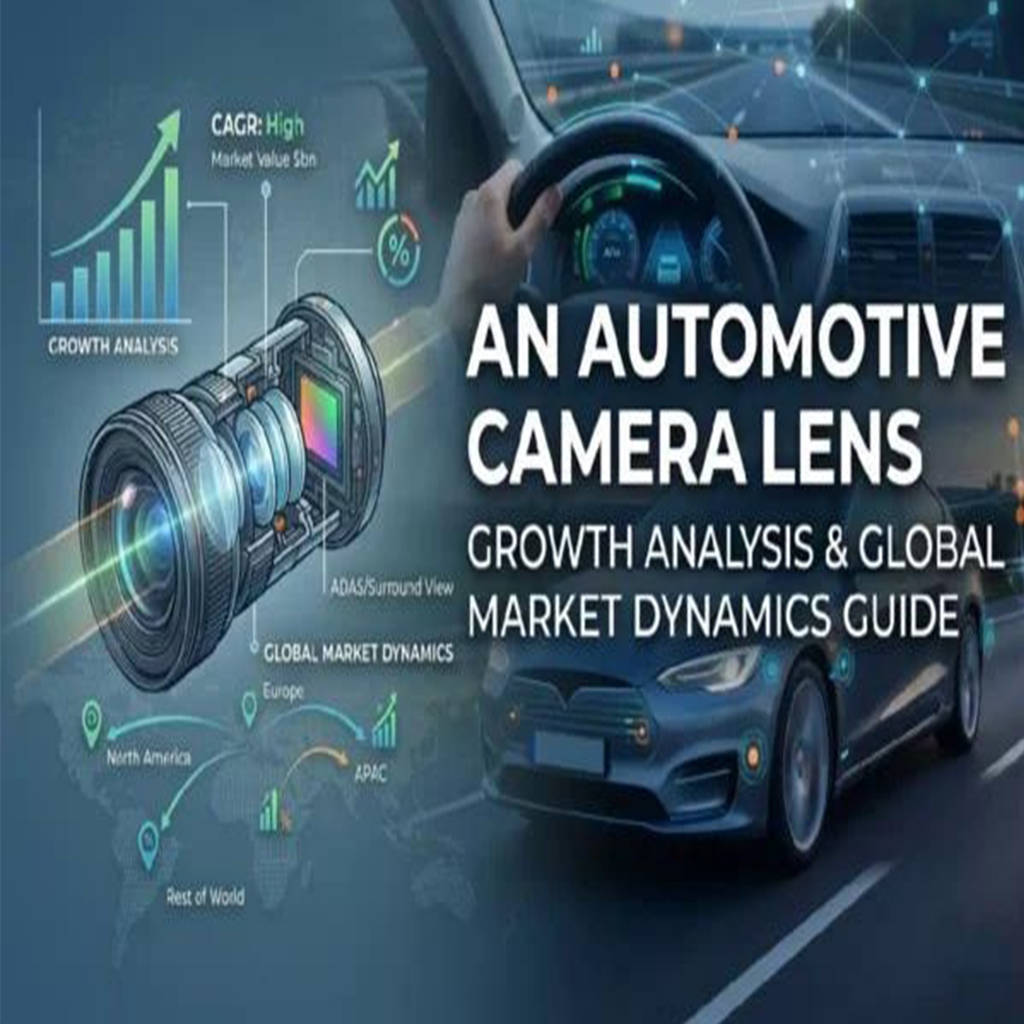
The market for automotive camera lens units is expected to grow rapidly, from $8.38 billion in 2025 to $27 billion by 2034, as many vehicles adopt Advanced Driver-Assistance Systems (ADAS) features and the entire industry moves towards self-driving. Rapid improvements in auto-driving technology are fueling the global automotive camera market, which is expected to grow faster than its current pace. As more advanced vehicles are used, there is a rising requirement for high-quality camera lenses in driver assistance systems to make self-driving more secure and efficient.
At the same time, robust road security rules are the best way to encourage car manufacturers to use automotive cameras with a high-quality M12 lens to decrease accidents and enhance the overall driving experience. The primary elements driving this rapid growth include the rapid development of self-driving vehicles, new judicial rules requiring higher security surveillance standards, and consumers’ demand for advanced technology in their vehicles. Economic aspects, such as rising disposable incomes, increasing vehicle sales, and rising demand. Nevertheless, growth might face some crucial challenges, including high costs, the difficult integration of exclusive technologies, and varying global regulations.
As security surveillance standards become increasingly important, the need for high-quality automotive infrared camera lens is likely to continue to grow, creating strong opportunities for the market.
What is the Automotive ADAS Camera Lens Market?
The automotive camera lens market comprises high-performance optical security surveillance lenses for vehicle cameras that support advanced driver-assistance systems (ADAS), such as parking assist, automatic braking, and departure warnings. This entire market is driven by rising demand for safety, high-resolution imaging, and self-driving technology.
Key Aspects of the Market:
- The market is growing significantly, with the overall automotive camera lens market projected to reach over $27 billion by 2024, extensively driven by compulsory safety surveillance regulations.
- An automotive machine vision lens is mainly used for front-facing, driver-monitoring, side-view, and rear-view systems that need precise object detection and image processing.
- An automotive infrared camera lens needs precise, active alignment manufacturing methods to ensure high-performance in safety surveillance systems.
- Lenses must deliver high-resolution, high-dynamic, and wide fields of view to function in varying, challenging weather and lighting conditions.
Automotive Camera Lens Market- Security Surveillance Uses Across Industries
| Industry / Sector | Security & Surveillance Application | Role | Key Technologies Used |
|---|---|---|---|
| Transportation & Traffic Management | Traffic monitoring and license plate recognition | Capture high-resolution images of vehicles for identification and traffic analysis | Automatic License Plate Recognition (ANPR), OCR imaging |
| Automotive & Mobility | Driver monitoring and cabin surveillance | Monitor driver behavior and vehicle interior for safety | AI vision, infrared lenses, and facial recognition |
| Fleet & Logistics | Vehicle fleet monitoring and video telematics | Record real-time video from commercial vehicles for safety and operational monitoring | Video telematics, GPS integration |
| Smart Cities | Public safety and urban surveillance | Monitor streets, intersections, and public spaces | Wide-angle lenses, AI analytics, object detection |
| Parking & Access Control | Smart parking and vehicle identification | Capture vehicle entry/exit and parking occupancy | Telephoto lenses, ANPR systems |
| Industrial & Manufacturing | Factory security and production monitoring | Monitor production lines, equipment safety, and worker activity | Machine vision lenses, industrial cameras |
| Oil & Gas / Energy Infrastructure | Remote facility surveillance | Monitor pipelines, plants, and restricted zones | Thermal imaging, low-light camera lenses |
| Retail & Commercial Buildings | Store and building security monitoring | Provide wide-coverage video surveillance | Varifocal and wide-angle lenses |
| Airports & Transportation Hubs | Passenger and baggage monitoring | Capture high-resolution images for security checks | AI-based object recognition |
| Autonomous & ADAS Systems | Environmental monitoring around vehicles | Detect pedestrians, obstacles, and lane markings | Fisheye lenses, stereo cameras, surround-view systems |
The Growth of Automotive Camera Lenses for Drivers
In today’s world, vehicles are a vital mode of transport and smart technological machines. It has led to the rapid growth of the automotive camera lens market.
1. Rapid Adoption of ADAS Features
ADAS features are now a common part of modern cars. Features such as lane departure warning systems, adaptive cruise control systems, and parking assist systems use cameras. While cameras are an essential part of the system, the camera lens is also imperative. It is essential to ensure the camera provides a clear & wide field of view, and night vision.
2. Growing Popularity of Electric Vehicles
The growing popularity of electric vehicles has also led to the growth of the automotive camera lens market. It has been observed that the makers of electric vehicles are always keen on providing a high-tech look and feel to the cars they produce. This has led to the use of multiple cameras in the rear view, surround view, and driver monitoring systems. It has been observed that the more cameras used in a vehicle, the more lenses are required.
3. Strict Government Safety Regulations
Government safety regulations are also providing strong support for this market. In many countries, rear-view cameras are almost a necessity in all new cars. If governments promote the use of such safety devices, car companies are forced to install them in all their vehicles. And every camera needs a good lens that delivers high-quality images and performs well in harsh weather conditions.
4. Autonomous Driving Technology Development
Heavy research in the development of autonomous driving technology is also providing a boost for the demand for camera lenses. Self-driving cars use many sensors to understand the environment and hence need cameras. Cameras need good imaging over long distances and a wide field of view. Hence, there is a focus on developing good camera lenses.
5. Demand for Better Driving Convenience
Today, drivers also want convenience features in vehicles. Features such as 360° cameras, smart parking cameras, and blind spot monitoring are making the driving experience easier. Cameras are the basis for all this technology. If car makers want to give drivers a better driving experience, they must incorporate high-resolution cameras and better lenses, and this is where the demand is coming from.
Technologies in the Automotive Camera Lens Development Market
Automotive camera systems are integral to vehicle safety systems in contemporary vehicles. Check out the technologies that rapidly enhance the growth and development of automotive camera lenses.
1. Advanced Glass Materials
Advanced glass materials are used to improve the quality of automotive camera lens materials. Optical glass is used to improve light focus, reducing lens distortion. Using optical glass materials can improve the quality of the camera lens to provide accurate images of the road and driving environment, even in adverse conditions such as at night, in rain, or in fog.
2. High Resolution Lens Design
High-resolution M12 lens design is another advanced technology used in automotive camera systems in contemporary vehicles. The high-resolution lens design plays a vital role in enabling accurate detection of road details, which are essential for ADAS systems to make real-time decisions in driving situations.
3. Wide Angle Lens Technology
Wide-angle lens technology gives vehicles a wider field of view. It implies that more road space can be seen in a single shot by the camera. Furthermore, the wide-angle lens in parking assist systems, surround-view systems, and blind-spot monitoring systems enhances vehicle safety.
Wrapping It Up!
The automotive camera lens market is all set to enter a period of rapid expansion as vehicles become smarter, safer, and more autonomous. As an automotive manufacturer, Superior CCTV Lens continues to develop and innovate self-driving capabilities and high-performance camera lenses, which remain an imperative element in enabling reliable vision-based security surveillance systems. We ensure to adopt ongoing advancements while manufacturing these premium lenses, considering optical engineering, sensor technology, and artificial intelligence. Connect with us today to get your hands on the best-quality automotive lenses shaping the future of global mobility and security surveillance at its most technologically advanced level.
Frequently Asked Questions
What are some of the key developments expected in automotive camera lens technology in the future?
Automotive camera lens technology is expected to improve in the future by having a wide-angle view, high resolution, and artificial intelligence, making it safer for vehicles to be driven autonomously.
What are some of the key reasons for the rapid growth of the automotive camera lens market?
The key drivers of the rapid growth of the automotive camera lens market are the adoption of ADAS technology, the popularity of electric vehicles, and government safety regulations that mandate camera-equipped vehicles.
What is the importance of camera lenses in ADAS technology?
The camera lens plays an important role in ADAS technology by capturing high-quality images.
When are infrared camera lenses used in automotive applications?
Automotive infrared camera lenses are primarily used for nighttime driving to enhance security surveillance.
Related Articles
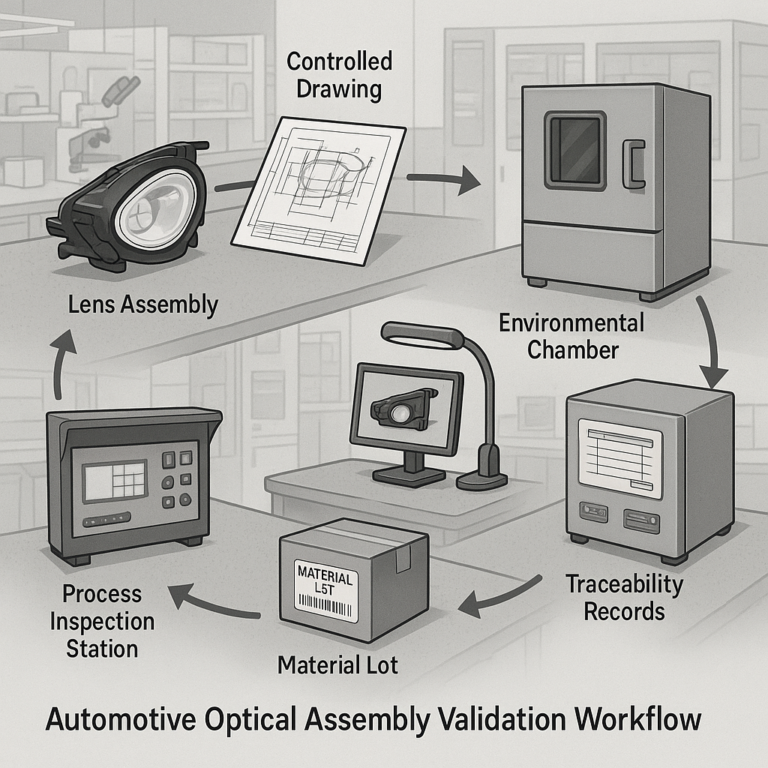
Automotive Lens Manufacturing: Validation and Traceability Programs
11 min read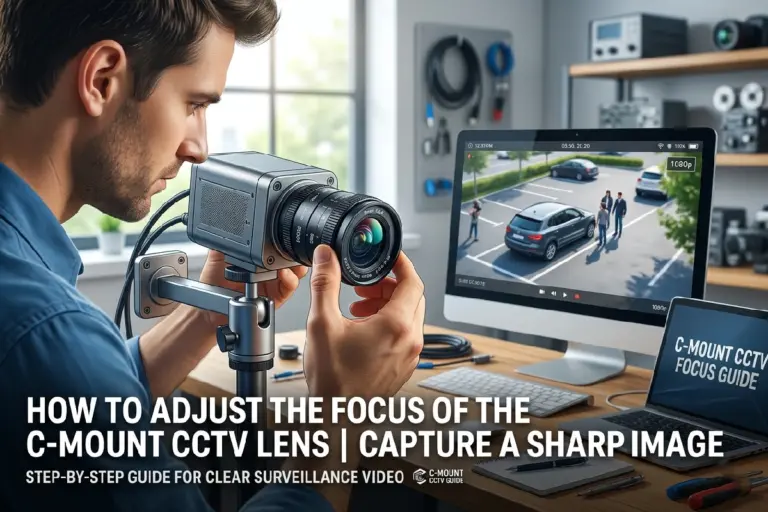
How to Adjust the Focus of the C-mount CCTV Lens | Capture a Sharp Image
6 min read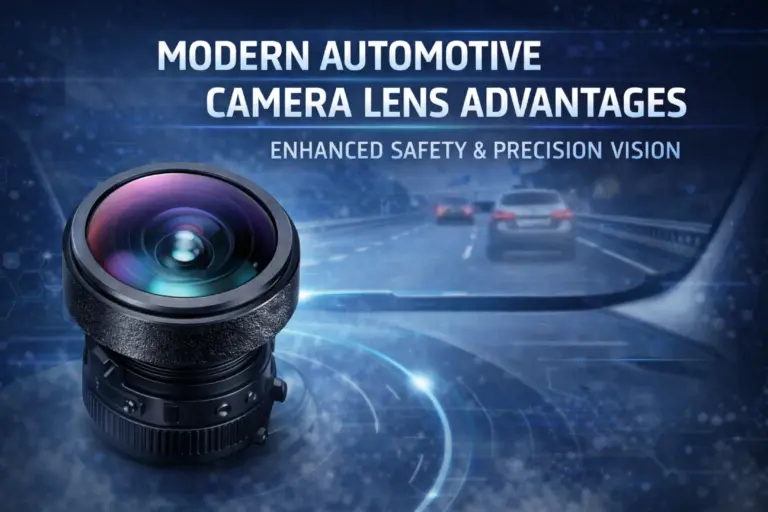
Clearer, Safer, Smarter: The Advantages of Modern Automotive Camera Lenses
6 min readAbout SUPERIOR OPTICS
SUPERIOR OPTICS specializes in CCTV lenses, machine vision optics, and custom optical solutions for security, industrial imaging, and specialty applications. We also provide professional lens selection and application support.