


Optical Design
Define the lens prescription around your sensor format, field of view and working distance. Evaluate trade-offs in resolution, distortion and illumination before selecting a design for prototyping.
Explore Optical DesignSUPERIOR OPTICS / CAPABILITIES
Optical manufacturing capabilities at SUPERIOR Optics span lens design and assembly, opto-mechanical integration, rapid prototyping, fabrication, coating, metrology and inspection. Use this hub to find the right technical service for your camera or imaging lens, prepare a project brief and identify what to verify before moving from sample evaluation to production.
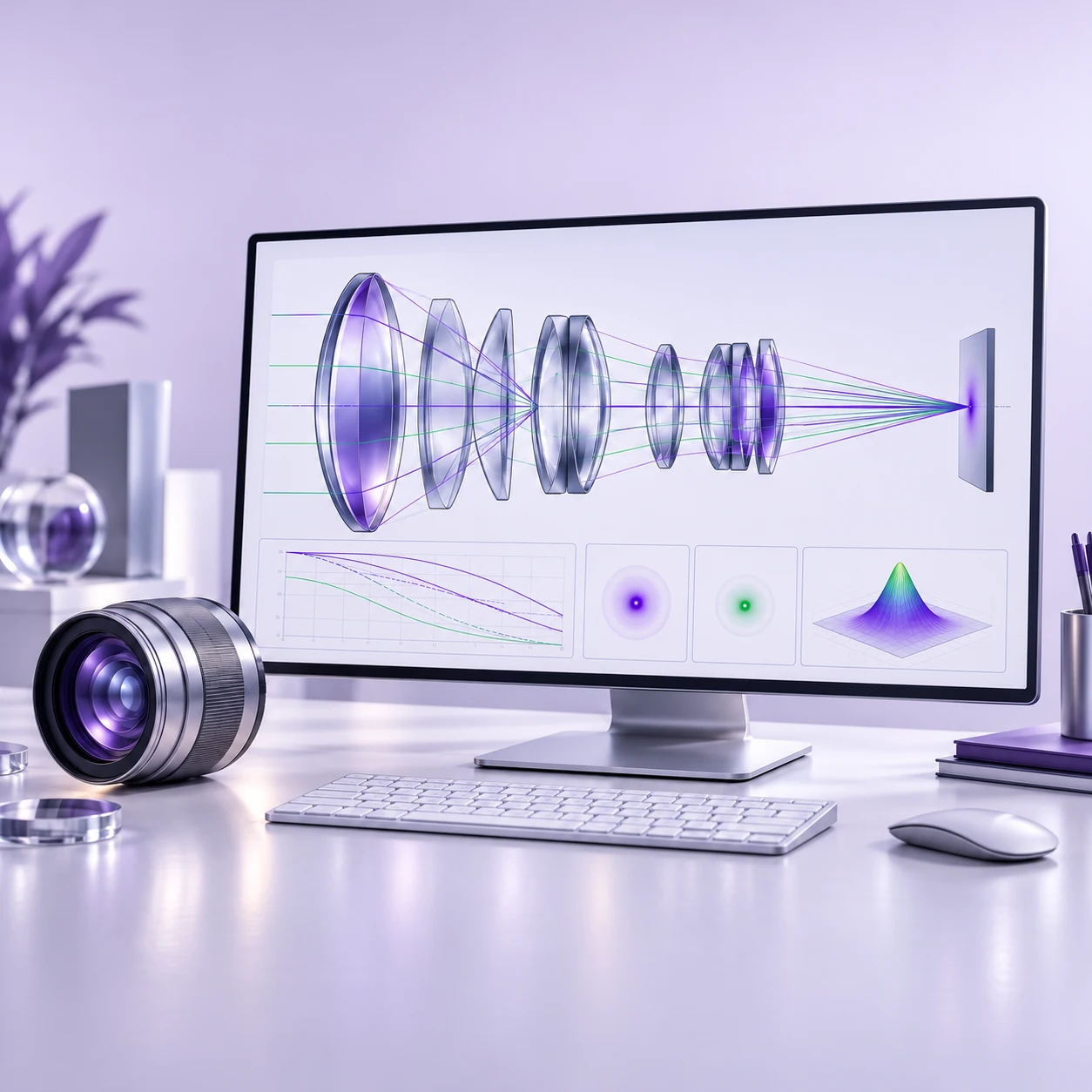
Define what the camera needs to see before choosing a lens or committing to a prototype. For optical manufacturing capabilities, share the sensor, field of view, working distance and space around the mount. These inputs help identify whether an existing lens fits, where custom design is needed and what a sample should prove.
Define the lens prescription around your sensor format, field of view and working distance. Evaluate trade-offs in resolution, distortion and illumination before selecting a design for prototyping.
Explore Optical DesignAssemble lens elements, spacers and housings to the specified tolerances. Align and focus the lens, then verify the assembled unit against agreed imaging and mechanical acceptance criteria.
Explore Optical AssemblyReview the mount, available envelope, datums and retention method alongside optical tolerances and environmental requirements.
Explore Opto-Mechanical DesignDefine what the prototype must prove. Review material availability, sample quantity and evaluation conditions before agreeing on a plan.
Explore Rapid Optical PrototypingTo assess which optical manufacturing capabilities your part requires, start with the drawing, substrate and optical surface specifications. For coating, specify the operating wavelength band and the transmission or reflection target. Include the incidence angle, environmental conditions and any durability requirements that should be checked before a sample is approved.
Review substrate, geometry, surface finish and tolerances to identify a feasible fabrication route before finalizing drawings.
Explore FabricationDefine transmission or reflection targets, wavelength range, angle of incidence and durability requirements before selecting a coating.
Explore Optical CoatingDecide how each critical optical or dimensional requirement will be measured. Agree on test conditions, fixtures and reporting before comparing samples, then define sampling and pass criteria for production. That gives engineering and procurement a common basis for reviewing results against the approved lens revision.
Identify the measurements that answer your project questions, then agree on the setup, conditions and report format.
Explore MetrologyDefine critical checks, sampling, pass criteria and traceability requirements for the approved drawing or lens revision.
Review InspectionBegin with the imaging requirement, then decide whether to evaluate an existing lens or define a custom sample. At each stage, record the open questions, agreed inputs and results. Before production, confirm which revision was approved, how it was tested and which changes require another review.
Confirm the sensor, scene, wavelength, operating distance and mechanical envelope.
Compare an existing lens with a new design. Agree on sample scope, interfaces and evaluation criteria.
Record the tested revision, operating conditions and measured results. Resolve deviations before approval.
Confirm the approved revision, forecast quantities, inspection plan and changes that require approval.
Share the details you already have, such as the sensor model, field of view, working distance, wavelength band and mounting constraints. If drawings or performance targets are available, include the revision and intended test conditions. Mark missing information and provide sample quantity, estimated production volume and the target schedule.
| Review area | Share with SUPERIOR | Agree before proceeding |
|---|---|---|
| Imaging target | Sensor model, field of view, working distance and wavelength band | Image quality targets and test conditions |
| Mechanical interface | Mount, envelope, datums, drawings and environment | Interface limits and tolerances |
| Fabrication and coating | Materials, geometry and spectral targets | Process scope, coating criteria and responsibilities |
| Sample and production plan | Sample quantity, expected volume and target milestones | Evaluation plan, timing and quotation scope |
| Acceptance and records | Critical dimensions, optical metrics and reporting needs | Sampling, pass criteria, revision and traceability |
For published glass data and available forms, consult the material manufacturer. Confirm the actual grade, blank size and availability with the supplier for your project.
When reviewing optical manufacturing capabilities for your lens, request records that match the drawing revision and test conditions you intend to approve. Compare sample results with the agreed limits and clarify any gaps before signing off. Confirm which processes SUPERIOR or a partner will perform and what inspection and traceability records the order requires.
Review the approved drawing, specification and revision before samples are evaluated.
Agree on the fixture, wavelength, focus and other conditions relevant to each performance target.
Request a representative dimensional or optical report and match it to the sample revision.
Confirm sampling, traceability and how changes or out-of-spec results will be handled.
ENGINEERING QUESTIONS
Find out what to send before you request a quote, how individual processes can be reviewed, and what to agree on between sample approval and production.
Yes. Send the application, sensor, target field of view and installation constraints. Identify the requirements that are fixed and those still open for review.
Describe the part, required process and acceptance criteria. The team can review whether the scope can be quoted separately and what inputs are needed.
Metrology defines how a property is measured and under what conditions. Inspection uses the agreed measurements and checks to determine whether a part or batch meets the acceptance criteria.
Confirm the approved revision, sample results, forecast quantity, inspection requirements and change approval process before placing the production order.
PROJECT INQUIRY
Tell us what the lens needs to do and what stage the project is at. Share the sensor, available drawings, sample quantity and target schedule so we can identify the right next step.
Include a model number or the information currently available:
You do not need a complete optical specification to start. Send the information currently available, along with your delivery destination and preferred schedule.