


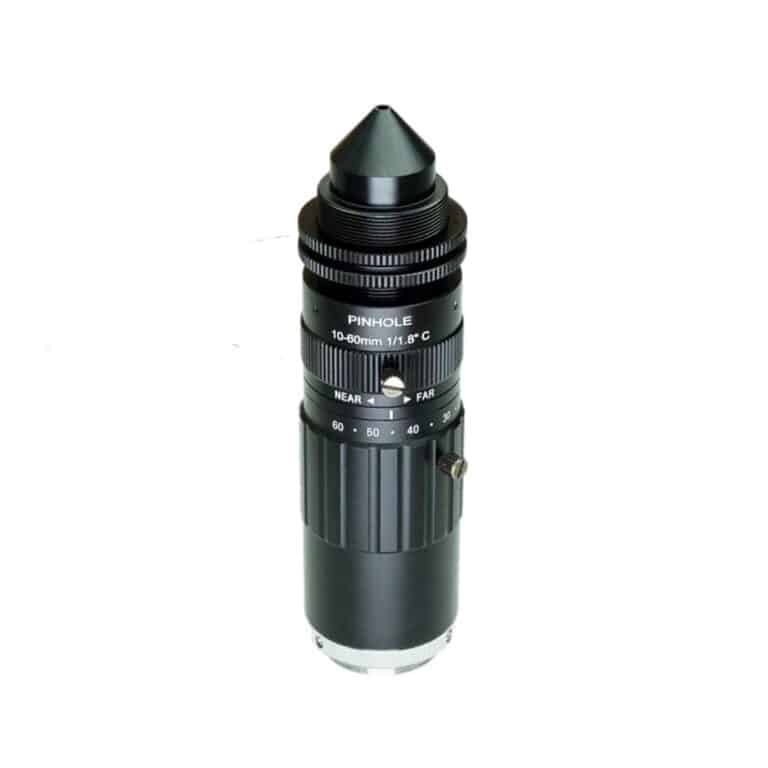
10-60mm Varifocal C-Mount Wide Angle Pinhole Lens | SPV1060MCP2MP
Review the product data sheet or request model-specific specifications.
SUPERIOR OPTICS / CATEGORY
Pinhole lenses in this catalog are lens-based imaging assemblies with a small front opening for installations where the viewing aperture or available space is restricted. SUPERIOR reviews the lens barrel, camera interface, installation clearance, sensor, and illumination requirements to assess optical coverage and mechanical fit for the proposed camera arrangement.
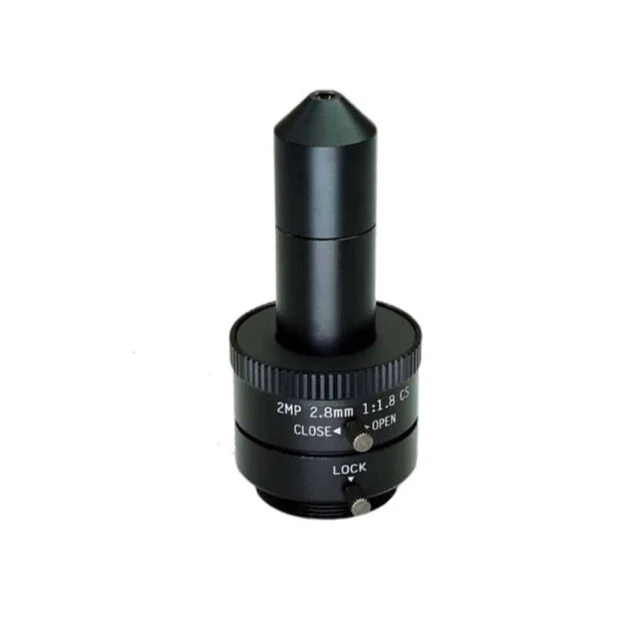
8 matching models
Review the product data sheet or request model-specific specifications.
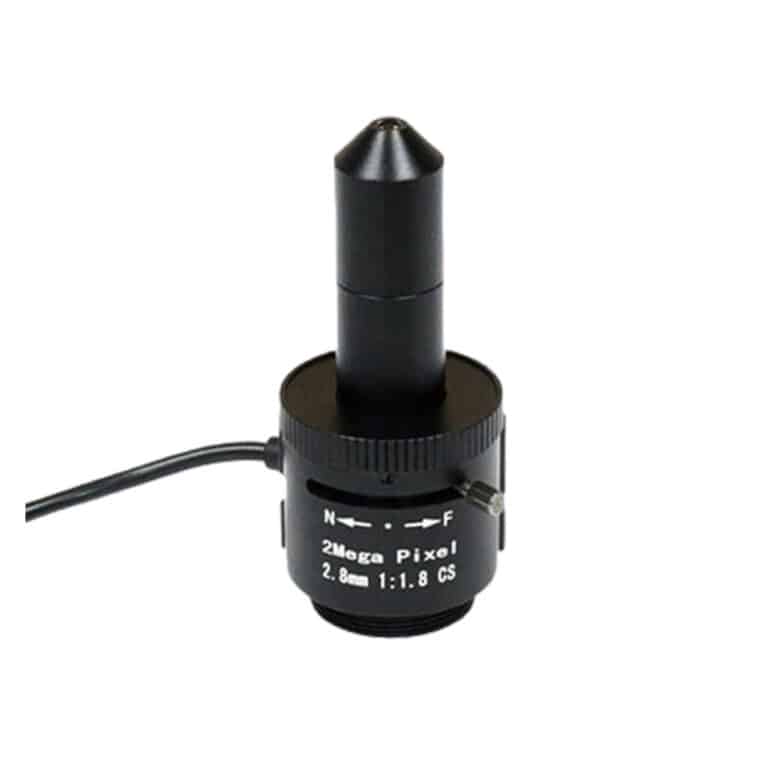
Review the product data sheet or request model-specific specifications.
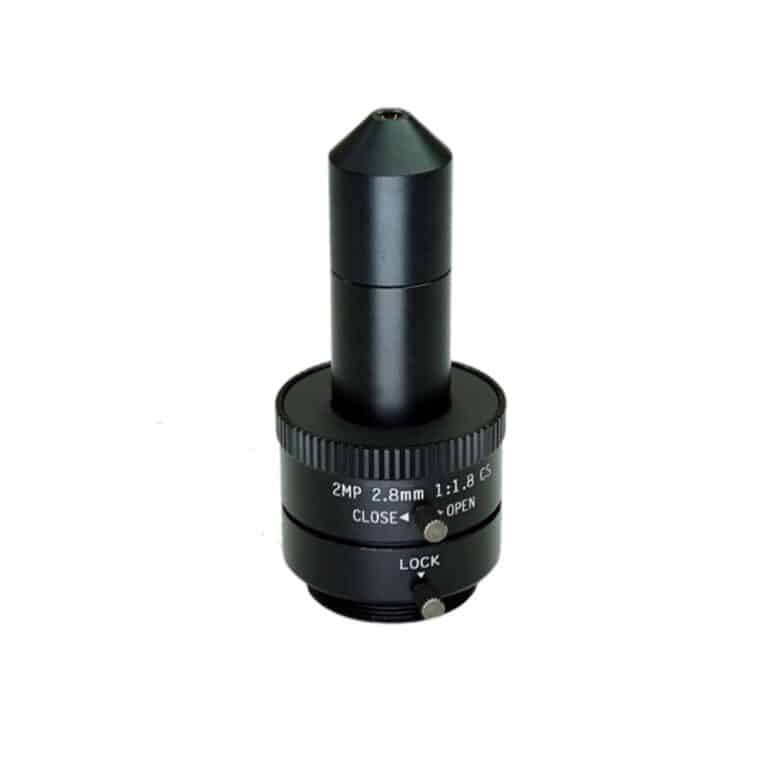
Review the product data sheet or request model-specific specifications.
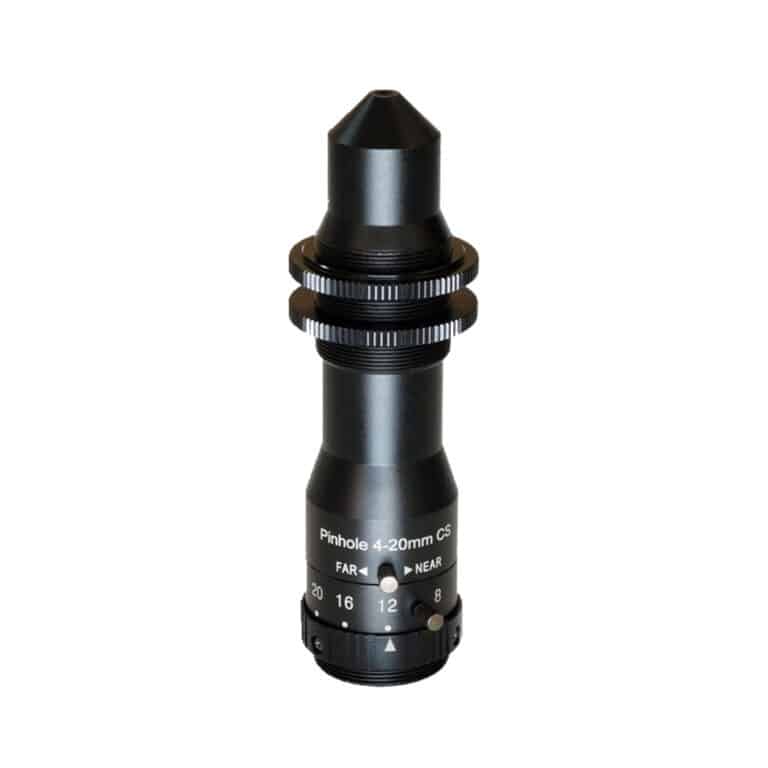
Review the product data sheet or request model-specific specifications.
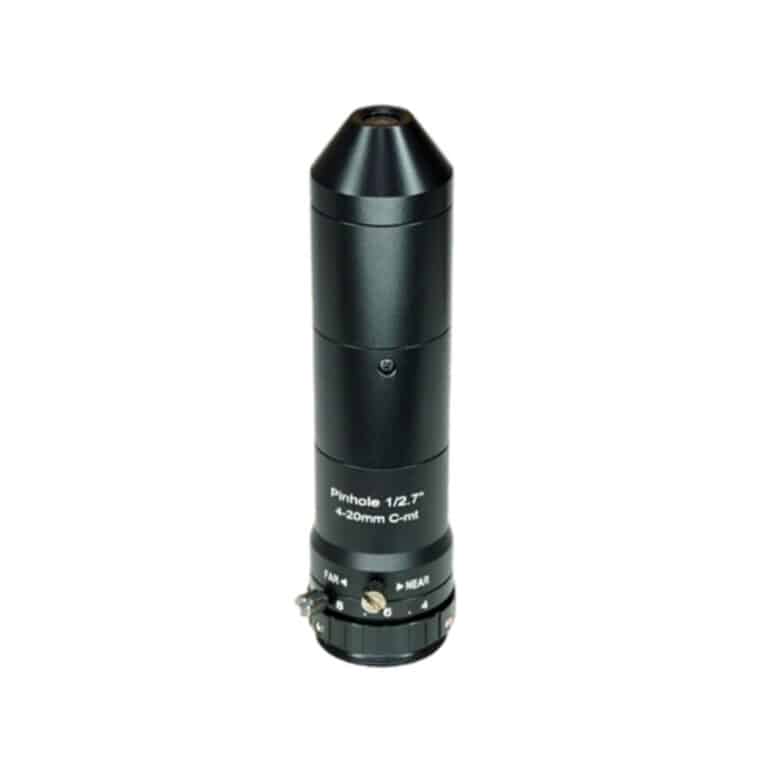
Review the product data sheet or request model-specific specifications.
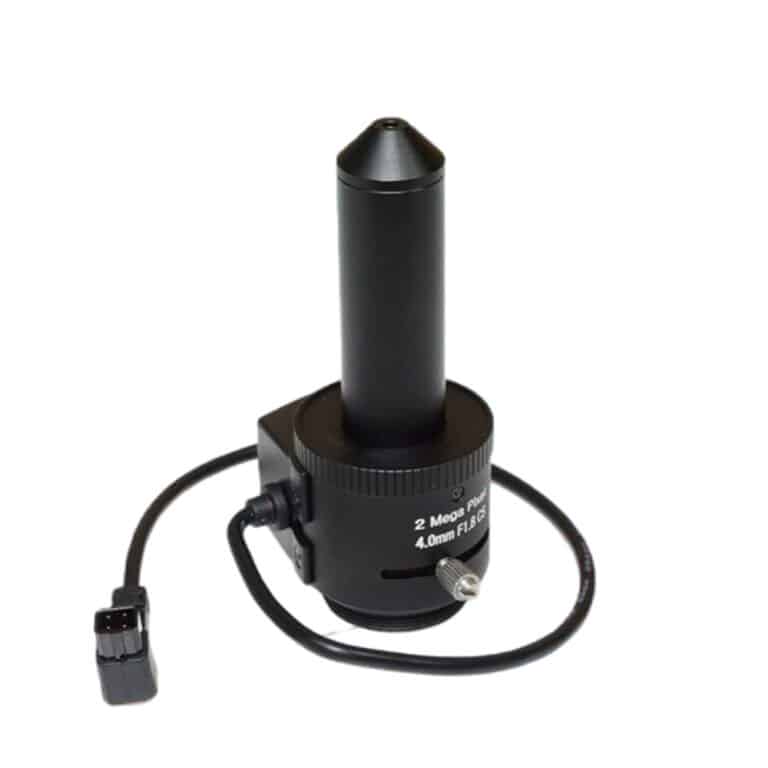
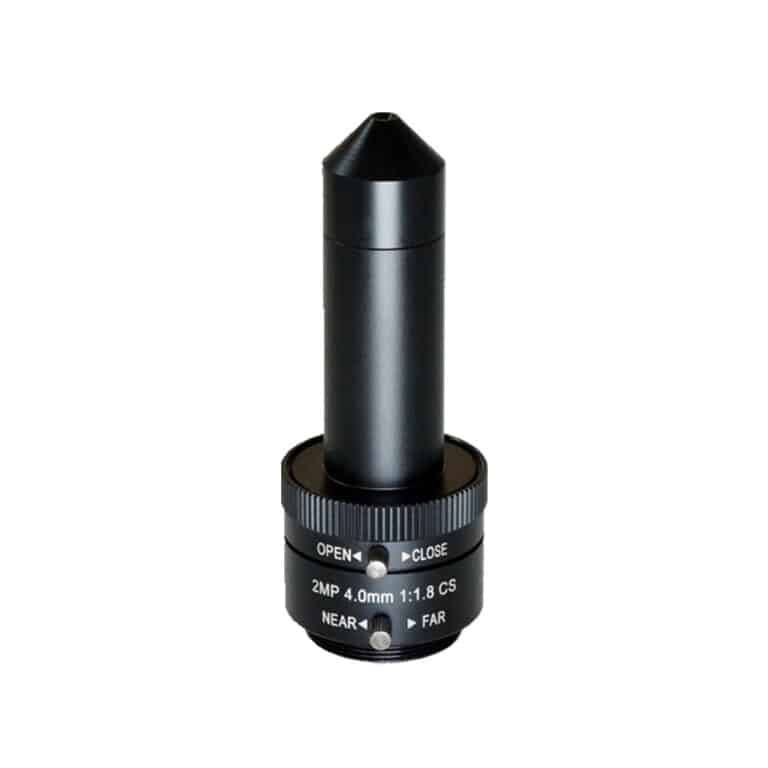
Review the product data sheet or request model-specific specifications.
Use these illustrative inputs to prepare your lens selection brief. This checklist is not a model specification or an interactive product filter. Confirm all values against the selected model data sheet, or request engineering selection support.
| Parameter | Selection example / input | Verification required |
|---|---|---|
| Front opening | Example: maximum 2 mm viewing opening requirement | Verify the complete aperture geometry and field clipping. |
| Sensor and focal length | Example: 1/3-inch format with 3.7 mm nominal focal length | Confirm usable field on the actual active sensor. |
| Interface | Example: C-mount or CS-mount camera requirement | Check flange distance and available focus adjustment. |
| Barrel envelope | Example: 30 mm maximum insertion length requirement | Review step dimensions, mounting and installation clearance. |
| Illumination | Project-defined scene brightness and exposure | Evaluate image quality through the actual viewing opening. |
Pinhole Lenses provide a compact viewing tip for imaging through a limited front opening. Match the lens entrance geometry, panel thickness and tip position to the required viewing angle; check the complete housing for obstruction and vignetting.
Compare available models by the specified mount and thread pitch, sensor coverage and focusing arrangement. Confirm holder engagement, rear clearance and flange requirements where applicable; mount size alone does not establish optical compatibility.
Select focal length and image-circle coverage for the intended sensor and object distance. Evaluate useful field of view, edge detail and distortion using the actual camera, viewing opening and housing configuration.
Review barrel dimensions, viewing-tip placement, filter configuration and installation space for your camera assembly. Evaluate samples under the planned lighting and exposure, and agree on focus retention and acceptance criteria before production.
Pinhole lens evaluation should include the actual sensor, viewing opening and housing geometry. Agree on optical performance, mount fit and focus-setting conditions, then request applicable drawings, sample images and inspection records before approving the production configuration.
Evaluate center and edge detail, distortion and illumination uniformity at the intended object distance. Check the usable field of view through the actual panel opening, and confirm any visible or infrared performance requirements for the selected model.
Verify the specified CS, C, M12 or M9 interface, applicable thread pitch and critical dimensions against the approved drawing. Check tip diameter, protrusion, holder engagement and rear clearance for interference with the sensor, filters or housing.
Set focus with the intended camera and installed viewing-tip geometry. Check image alignment and focus retention; where adhesive locking is used, agree on the process and inspect image quality after curing.
Review appearance, clean optical surfaces, model identification and protective packaging against agreed requirements. Request applicable inspection records, batch identification and approved specification revisions before shipment release.
Request relevant drawings, test conditions and project-specific inspection evidence.
Camera specifications help define the imaging requirements for pinhole lenses selection. EMVA 1288 provides a framework for characterizing machine-vision sensors and cameras. Use the camera manufacturer’s published data alongside lens-specific checks for sensor coverage, chief ray angle and image quality.
Review the viewing opening, housing geometry and imaging task before selecting the lens and camera configuration.
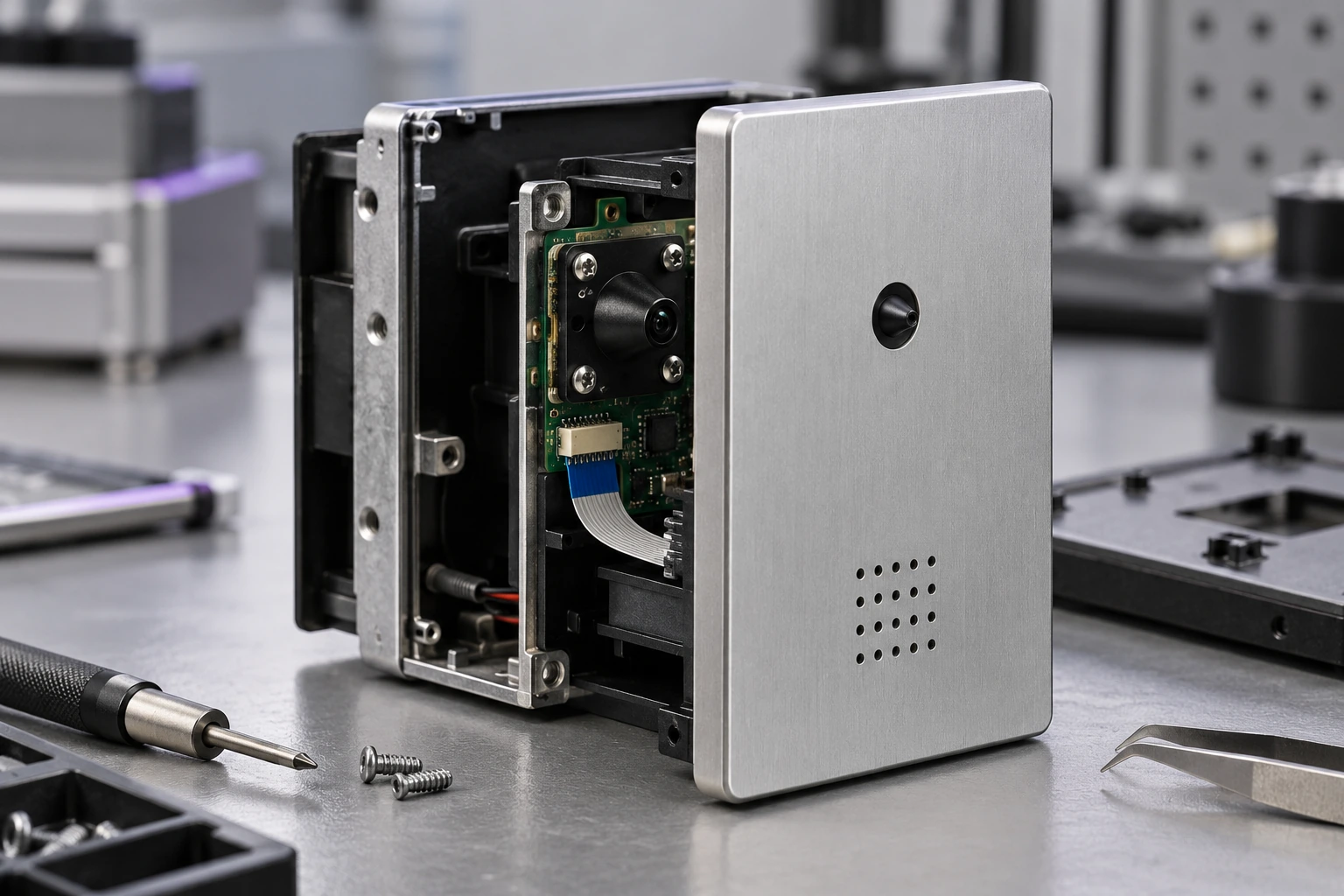
Integrate a small viewing tip into a compact security or access-control camera housing. Review scene coverage, panel thickness, low-light exposure and filter configuration with the intended camera before approving the enclosure design.
Discuss Security Integration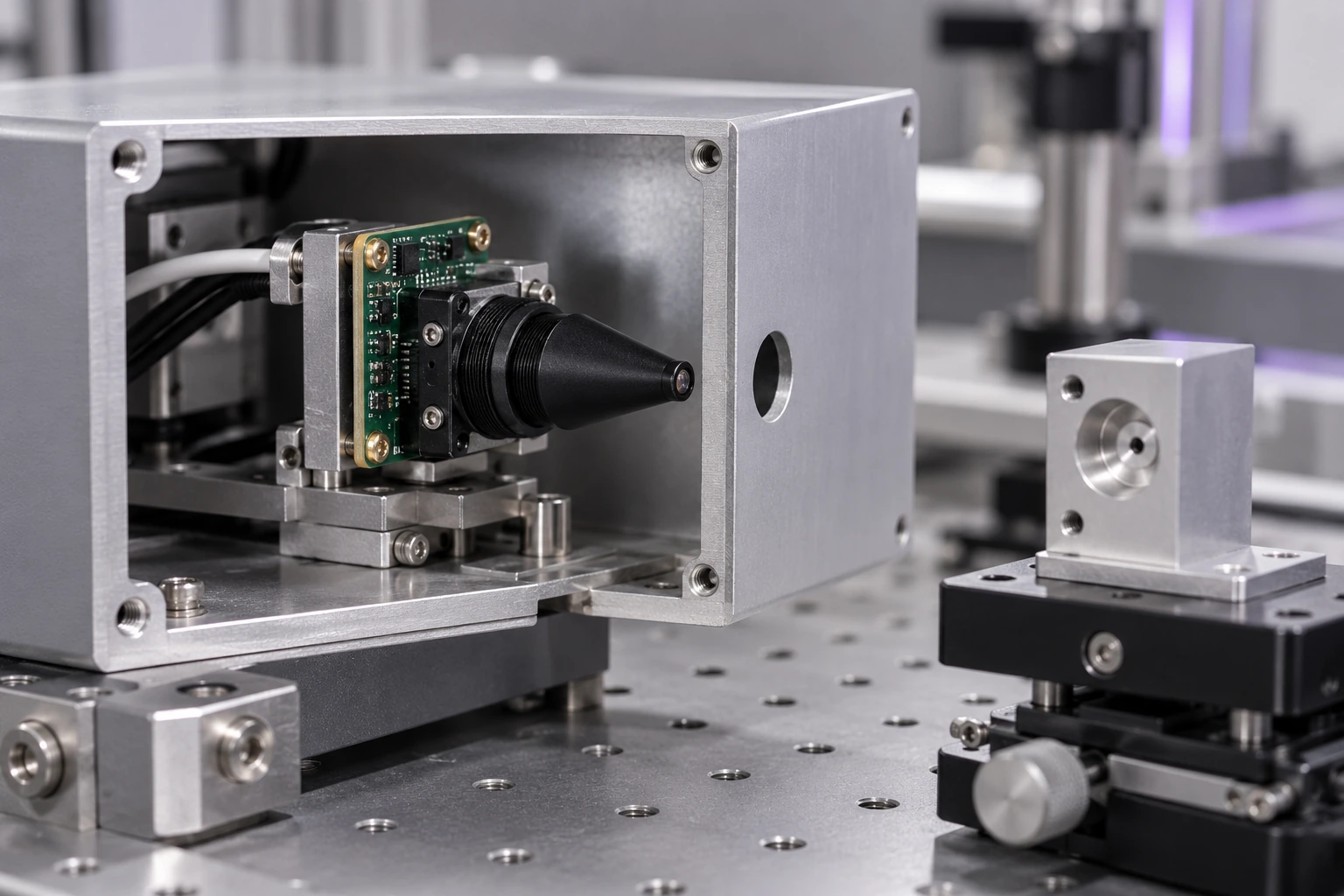
Fit a camera into an instrument or compact device with a restricted front opening. Compare CS, C, M12 or M9 models against available space, sensor coverage and focus adjustment, then evaluate the assembled module with representative targets.
Discuss OEM Camera Modules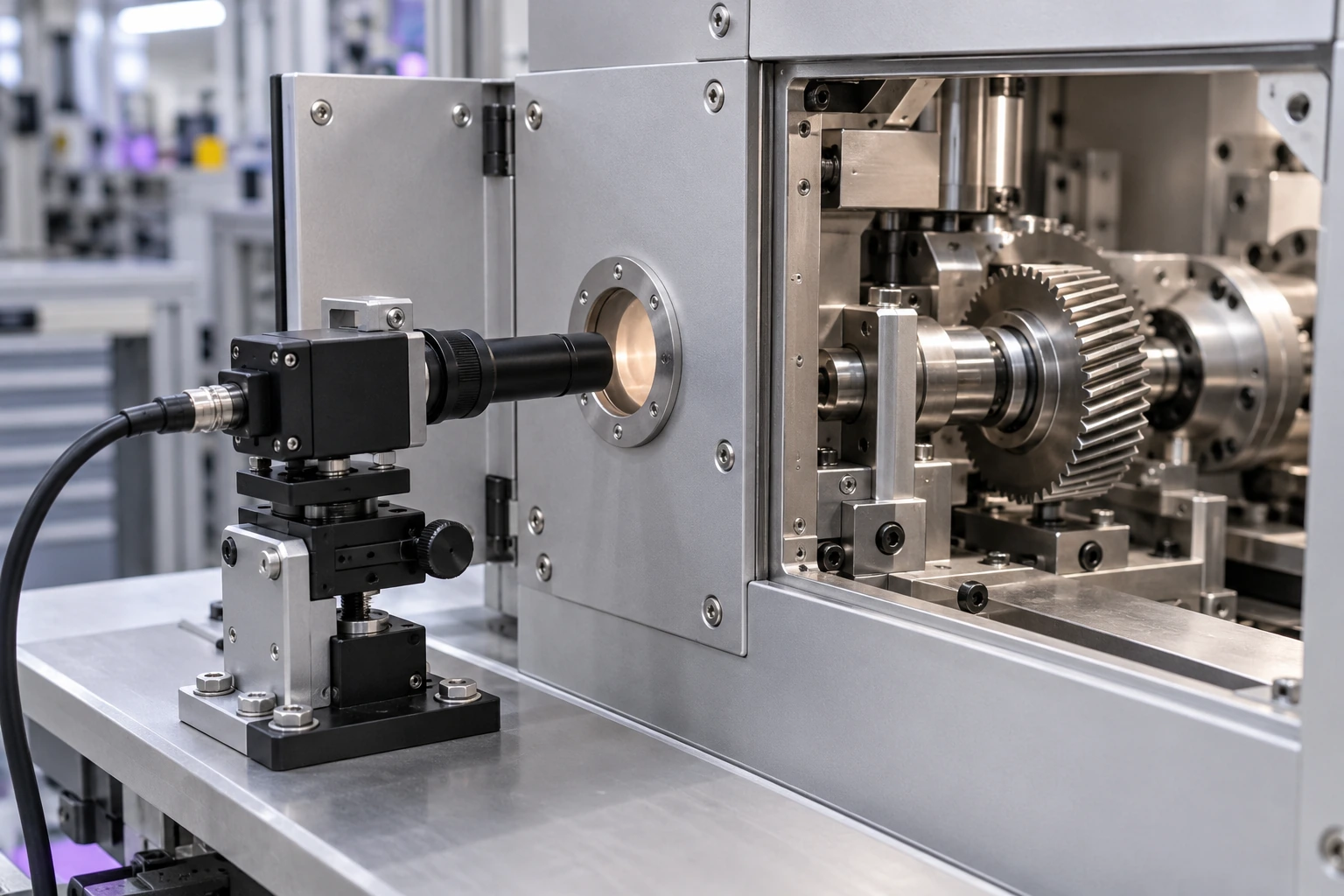
Observe a defined target through a small opening in an equipment enclosure. Check obstructions, lighting, working distance and usable image detail; agree on any protective-window and environmental requirements for the installation.
Discuss Equipment ObservationIllustrative application scenes.
Compare related lenses, review selection guidance or discuss a custom requirement.
Compare lenses by scene coverage, sensor compatibility, mount and day-night requirements.
ExploreReview compact board-camera lenses by field of view, holder fit, rear clearance and image quality.
ExploreDiscuss optical targets, mechanical interfaces, sample evaluation and production requirements.
Discuss OEM / ODMBUYER QUESTIONS
Answers to common selection and project questions.
No. Here the term identifies an optical assembly with lens elements and a small front viewing opening. Confirm the optical design and installation requirements rather than applying assumptions from lensless pinhole photography.
The opening diameter, thickness, and position relative to the lens can clip the field or reduce illumination. Evaluate the complete housing geometry with the selected lens and sensor.
No. Although their thread interface is similar, flange focal distance and available focus adjustment differ. Confirm the lens drawing, camera datum, and any required spacing before installation.
Provide a section drawing showing the viewing opening, wall thickness, insertion depth, mounting points, sensor position, and available focus travel. Include the required field of view and scene illumination for the optical review.
PROJECT INQUIRY
Send a section drawing of the installation with sensor data, viewing aperture, clearance limits, and required coverage. Request a pinhole lens fit review, sample recommendation, and OEM quotation.
Include a model number or the information currently available:
You do not need a complete optical specification to start. Send the information currently available, along with your delivery destination and preferred schedule.