


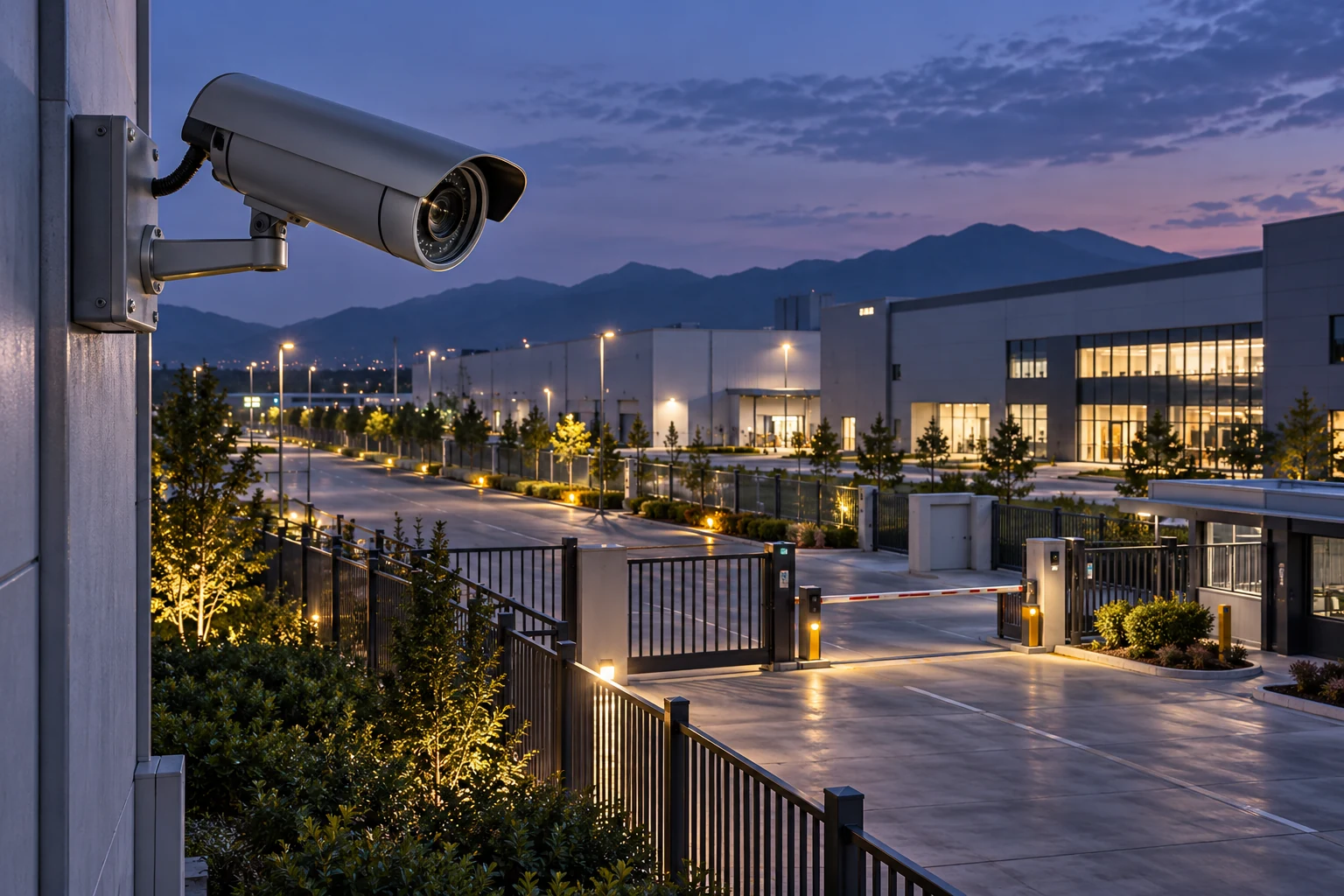
Security & Surveillance
Match scene width, target detail and lighting across day and night. Select the camera sensor and lens with the intended installation height and IR illumination in mind.
Explore Security Camera LensesSUPERIOR OPTICS / APPLICATIONS
Optical lens applications range from surveillance and factory inspection to dimensional measurement and imaging inside compact devices. Start with what the camera must detect, measure or show, then match the lens to the sensor, field of view, working distance and lighting. Use the examples below to find a lens family to evaluate.
Choose the imaging task closest to yours. Each application links to a lens family you can evaluate against your camera, target and installation constraints.
Match scene width, target detail and lighting across day and night. Select the camera sensor and lens with the intended installation height and IR illumination in mind.
Explore Security Camera Lenses
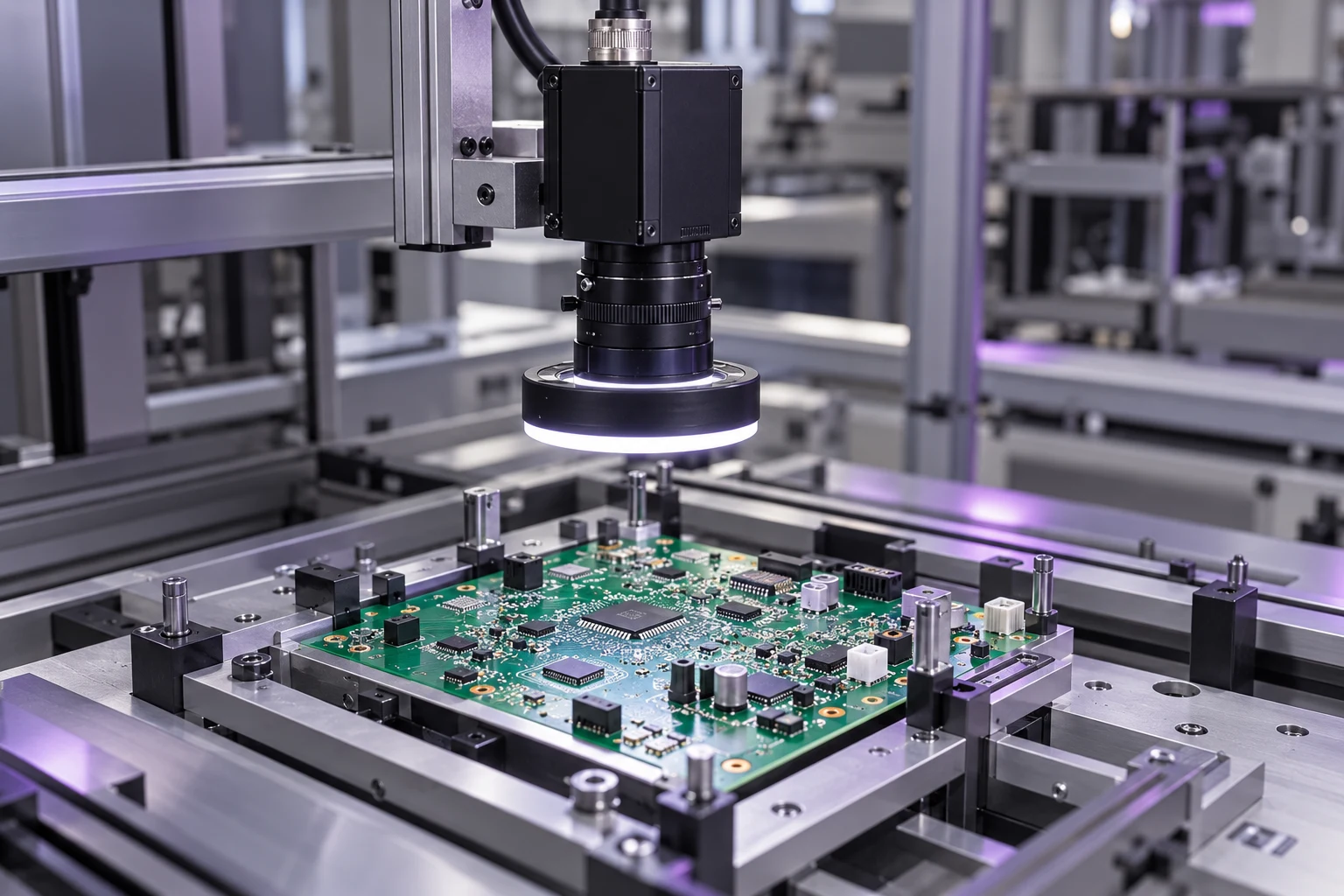
Inspect assemblies, find surface defects or guide a robot. Define the smallest feature to resolve, available working distance and how parts are illuminated.
Explore Machine Vision Lenses
Inspect a moving web or continuous surface across its full width. Size the optics to the line sensor and check edge detail, line speed and illumination uniformity.
Explore Line Scan Lenses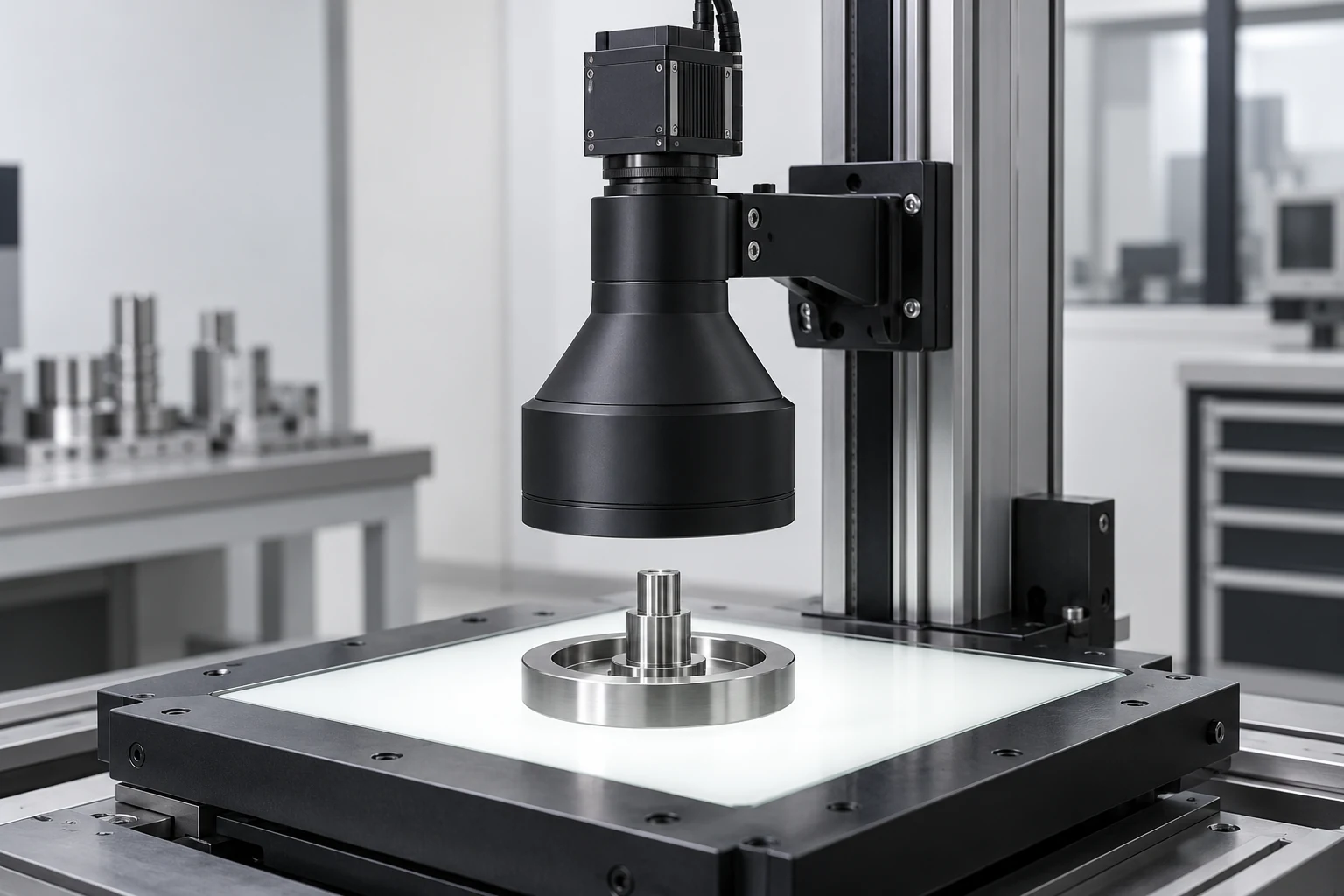
Measure edges, gaps and part dimensions. Consider a telecentric lens when object height varies, then verify magnification, calibration and tolerance in the measurement setup.
Explore Telecentric Lenses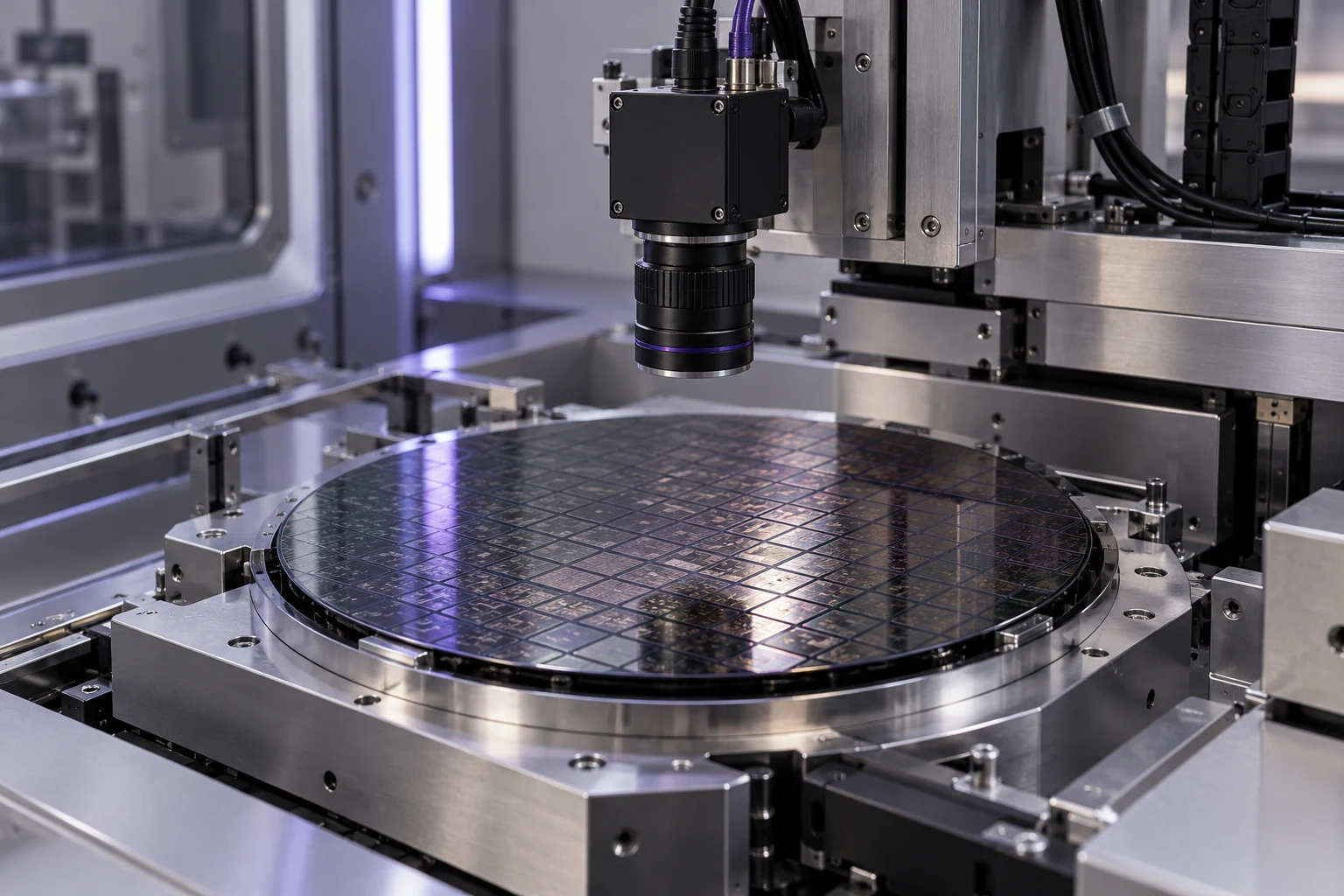
Evaluate whether short-wave infrared imaging provides useful contrast for the material or defect. Test representative samples with the intended sensor, illumination and optics.
Explore SWIR Lenses
Fit the required view into a compact camera or instrument. Check mechanical clearance and sensor coverage; for wide views, confirm projection and edge detail.
Explore M12 LensesIllustrative application scenes.
Use these starting points to prepare a shortlist. Verify candidate models against the complete imaging setup before committing to a design.
| Application | What to define first | Lens family to evaluate |
|---|---|---|
| Security & Surveillance | Target distance, required scene width and night lighting | Security camera lenses |
| Machine Vision & Automation | Smallest feature, sensor, working distance and lighting | Machine vision lenses |
| Line Scan & Web Inspection | Web width, speed, line sensor length and lighting | Line scan lenses |
| Dimensional Measurement | Measurement tolerance, height variation and required field | Telecentric lenses |
| SWIR Inspection | Wavelength band, sensor and sample contrast | SWIR lenses |
| Embedded & Panoramic Imaging | Envelope, sensor coverage, field of view and projection | M12 or fisheye lenses |
When heat, space or viewing geometry limit the installation, share the operating conditions and mechanical drawings before selecting a lens.
Start with the viewing port, camera position, heat exposure and whether the project calls for visual monitoring or temperature readings.
Review High Temperature Pinhole LensesFor panoramic coverage, define the usable field of view, image circle and projection before finalizing the camera housing.
Review Fisheye LensesA short brief helps narrow the lens options and identify where a prototype or sample test is needed.
Describe the scene or part, the detail to detect and what counts as a usable image.
Provide the sensor model, pixel size, mount and available space.
Include field of view, working distance, lighting, spectral band and environmental constraints.
Share representative images or samples, the required tolerance and your prototype schedule.
Organize camera, target and installation inputs before reviewing candidate lenses.
Open Lens Selection ToolReview sensor coverage, field of view, working distance and optical performance.
Read Engineering GuidesBUYER QUESTIONS
Answers to common questions about matching optical lenses to industrial and embedded camera applications.
Start with the sensor model, required field of view, working distance and lens mount. Add the smallest feature to resolve, lighting setup and any mechanical limits.
Consider telecentric optics when changes in object height can affect dimensional measurements. Validate the usable field, magnification and calibration under the actual measurement conditions.
Check the model’s specified spectral band and transmission, and test it with the intended SWIR sensor and illumination. Do not assume that an optic specified for visible light is suitable.
Send your camera and enclosure drawings, target image requirements, operating conditions and prototype quantities. SUPERIOR can review standard, modified or custom options.
PROJECT INQUIRY
Send your camera model, target details, field of view and working distance. Include any lighting, wavelength or mechanical constraints so we can review suitable lens options.
Include a model number or the information currently available:
You do not need a complete optical specification to start. Send the information currently available, along with your delivery destination and preferred schedule.