
The surveillance system is a necessity in every corner of space. We use it for end-to-end safety of residential place surveillance or to monitor warehouses or retail shops. However, just installing the cameras is not sufficient. One should ensure they use a fisheye lens for CCTV camera to enhance safety. In general, standard CCTV lenses (like 4mm or 6mm) are used for monitoring or surveillance, whether in industrial, commercial, or residential settings. These lenses are great for monitoring or capturing images. However, they leave blind spots in corners, which creates a space for a mishap to occur. It raises the need to install 3-4 separate cameras.
So they can fully cover a single warehouse or retail lobby and protect their products. Additionally, the cost of wiring and maintaining four cameras is much higher than that of a single fisheye lens for a CCTV camera. With this, your space can be protected, and you can effectively save on the maintenance and installation costs of multiple cameras.
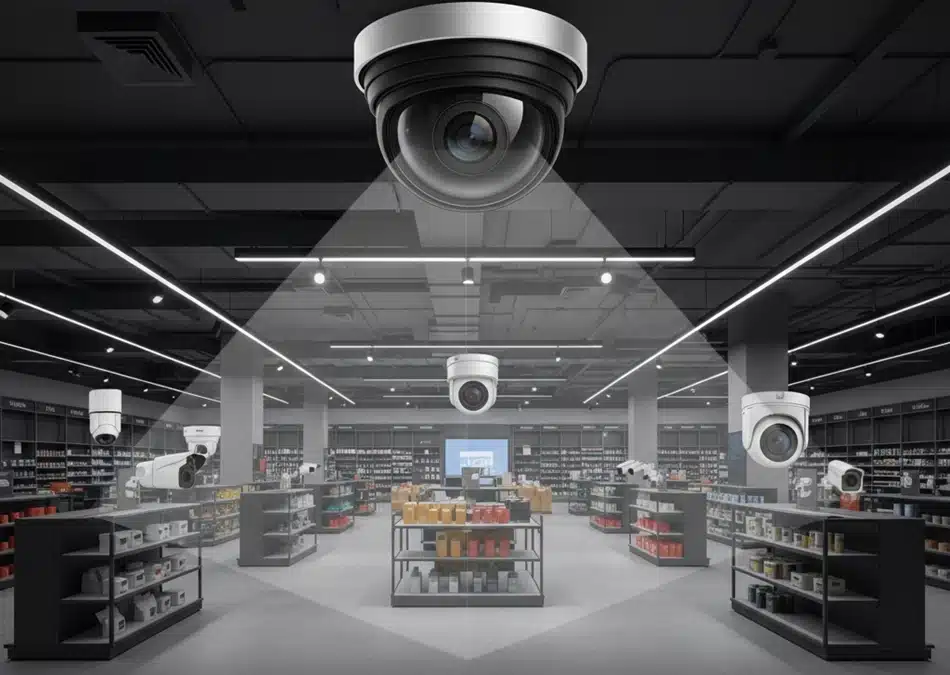
What are Fisheye Camera Lenses & Their Types?
A fisheye CCTV lens is an ultra-wide lens designed to capture a vast field of view with a curved, hemispherical perspective. Their range typically spans 100° to 180°, allowing them to provide panoramic or hemispherical coverage. Meaning it can cover an entire room or a large open area with a single camera. Unlike traditional lenses that aim to minimize distortion, fisheye lenses embrace it, resulting in a unique and exaggerated perspective. While upgrading from a standard to a fisheye lens, you are essentially capturing everything at once, making it easier for yourself.
Usually, these lenses can provide coverage up to 180°. However, if it is mounted properly on the ceiling of a space, it can provide full 360° coverage of the surrounding area. Most of the time, it is essential to design 360 degree fisheye CCTV lens specifically and mount it correctly (often on the ceiling). Because standard fisheye lenses, like those used in photography, usually max out at 180° field of view. So, they don’t automatically give 360°, unless specifically engineered. There are three different types of fisheye lenses. Let’s look at them one by one:
1. Circular Fisheye Lens
As their name suggests, these circular fisheye lenses capture images up to 180° and produce circular images without edges. The circular lenses’ design allows them to capture unusual landscapes, cityscapes, and architecture. They are also suitable for creative photography, such as recording extreme action, scientific imaging, planetarium visuals, and filmmaking. However, their images have one shortcoming: a noticeable black border around the circular image.
2. Full-Frame Fisheye Lens
The full-frame wide angle CCTV fisheye lens offers the same 180° field of view but only along a diagonal. The lenses cover the entire area of the camera sensor, resulting in a rectangular frame without noticeable cropping or black borders. These lenses are an ideal choice for applications like landscape photography in traditional places and architectural photography. The one & only downside of these lenses is that they don’t provide a complete 180° black border view.
3. Diagonal vs. Horizontal Fisheye
In a diagonal lens, they capture an image across the frame diagonally. While using a horizontal fisheye lens, the focus shifted to a distorted image primarily focused across the horizontal plane.
Cost Benefits of 1 Fisheye Lens vs. 4 Standard Lenses
Choosing the right CCTV lens isn’t just about the optics. It requires many other aspects to focus on, including infrastructure costs. Replacing a cluster of fixed cameras with a single fisheye CCTV lens is actually very beneficial. It dramatically reduces your installation costs and hardware expenses, and in the long run, you also save on maintenance charges. The table below represents the single fisheye development and traditional multi-camera corner setup.
| Comparison Factor | Traditional 4-Camera Setup | CCTV Fisheye Solution |
|---|---|---|
| Hardware Required | 4 Cameras, 4 Brackets | 1 Camera, 1 Mount |
| Cabling Needed | 4 Ethernet/Coax Cables | 1 Ethernet/Coax Cable |
| Power Consumption | High (4 Power Supplies) | Low (1 Power Supply) |
| Blind Spots | Likely (Under cameras/corners) | None (Total 360° coverage) |
| Maintenance | High (4 lenses to clean/focus) | Low (1 lens to clean/focus) |
When Not to Use a Fisheye Lens: A Guide From Superior CCTV
At Superior CCTV, we believe in using the right tool for the job. While a fisheye lens for CCTV camera provides incredible coverage, it is not the perfect solution for every possible scenario.
As per our expert desk, here are the places you should avoid installing it and using it for monitoring. Avoid using a wide-angle lens in long, narrow hallways or corridors because it can create a circular image. Therefore, placing it in a narrow hallway means 70% of your video feed will just be the walls immediately next to the camera, wasting resolution. For hallways, standard narrow CCTV lenses are much more effective.
Additionally, avoid using fisheye if your primary goal is long-distance identification (like reading a plate at a gate 100 feet away). Because a 360° fisheye lens spreads its megapixels across a massive area, resulting in a drop in pixel density as you get further from the center. For long-range detail, you can opt for Superior CCTV varifocal or zoom lenses.
Summing It Up!
While the surveillance can be achieved with any CCTV camera lenses. A detailed, perfect image with 100% effectiveness can only be achieved with a fisheye lens for CCTV camera. These provide a wide-angle view with panoramic or hemispherical coverage, preventing distortion and providing a perfect view. The application can include action movies, scientific research, and filmmaking. Likewise, they serve as versatile cameras. Additionally, with 180° to 360° coverage, the safety of your space is guaranteed end-to-end, without compromise.
All you need to install these cameras in your space. They also work 4 vs 1, which means one is enough instead of 4 standard lenses. Therefore, get the lenses from Superior CCTV, a leading manufacturer of optical lenses.
FAQs
Will the images at the end appear blurry when captured by fisheye lenses?
Modern Fisheye lenses are manufactured with advanced technology. While the edges appear softer than the center, high-megapixel sensors ensure the image remains crisp.
What’s the best place to install fisheye lenses?
To get the best results, place the camera at the center of the ceiling in the room. These allow a complete birds-eye view without obstructions.
Will these lenses fit my current security cameras?
The lenses at Superior CCTV are standard-mount types, such as CS mount or C-mount, making them compatible with a wide variety of professional box cameras. However, for 100% confirmation, check the product description for the specified thread types or contact our support team for verification.
Is the technical support provided?
Yes. We have a professional technical support team that will guide you through the installation and focusing process to ensure your image is crystal clear. We can also assist with recommending the correct adapter if your camera mount differs slightly.
How fast does the Superior CCTV ship orders?
We understand that security projects often have tight deadlines. Superior CCTv strives to process and ship all in-stock orders within 24 hours of purchase. We also offer various shipping speeds at checkout to meet your project deadline. Tracking information is automatically emailed to you once your hardware leaves our distribution center.