


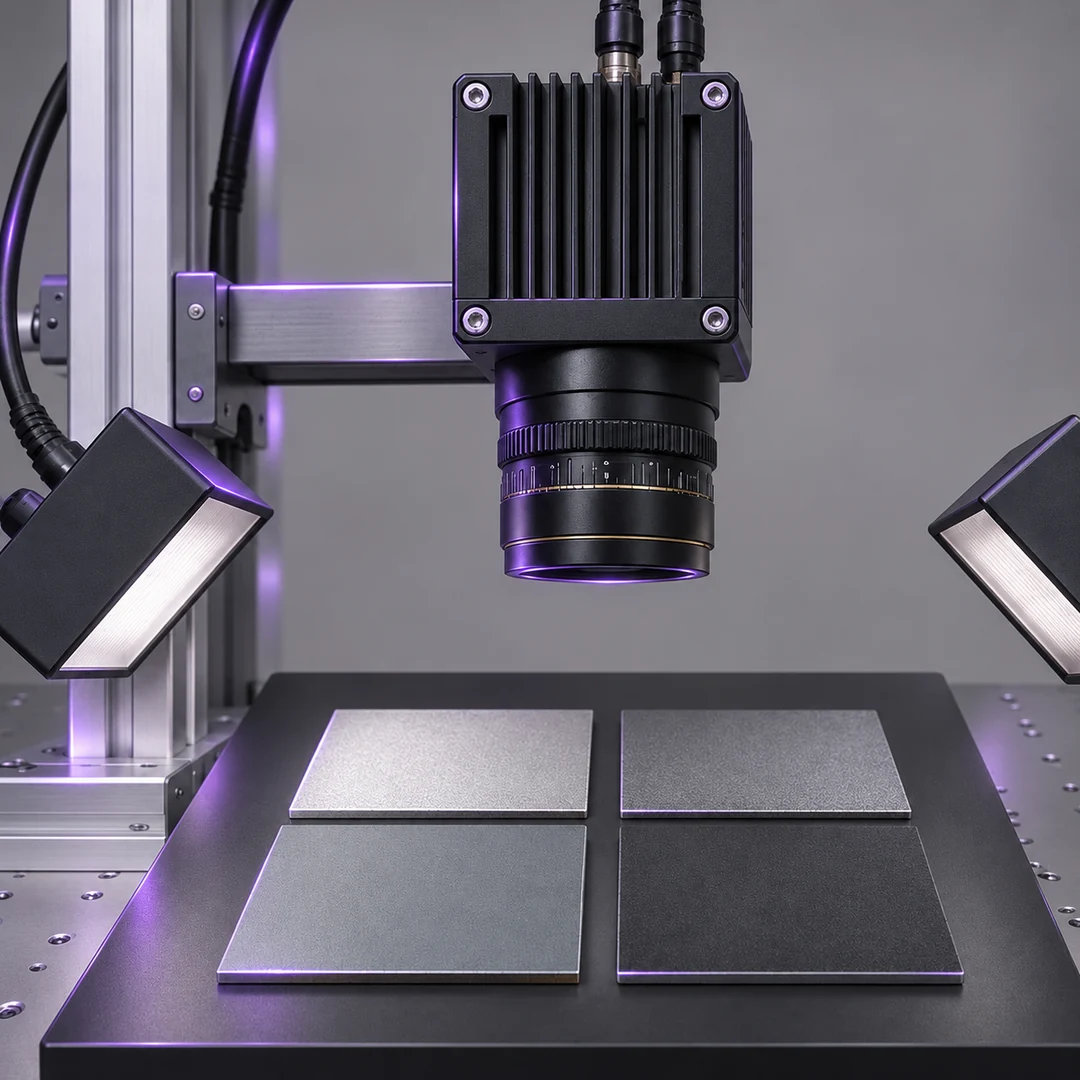
Moisture and Coating Contrast
Compare samples with known moisture or coating levels. Check whether the separation remains visible across normal thickness and finish variation.
SUPERIOR OPTICS / APPLICATIONS
SWIR Inspection starts with a sample test. Compare acceptable and defective material under candidate wavelength bands and lighting geometries, then confirm that the contrast remains useful at production speed. Check the camera response, lens transmission, and any filters together rather than assuming a wavelength that works on one sample will work on all runs.

SWIR Inspection can help distinguish materials or defects that look similar in visible light. Use the scenarios below to select representative samples and decide where to test wavelength, illumination angle, and exposure.
Compare samples with known moisture or coating levels. Check whether the separation remains visible across normal thickness and finish variation.

Test visually similar polymers or substrates from several batches. Compare the contrast under candidate wavelength bands before deciding which band to use.

Test acceptable and defective samples with the intended lighting geometry and line speed. Check for glare, blur, and contrast changes near the edges.
SWIR Inspection depends on the full optical path. Use known-good and known-defective samples to measure contrast, then confirm that the result remains useful across operating speeds and normal production variation.
Test known-good, borderline, and defective samples from several batches. Include normal differences in finish and thickness.
Compare candidate bands using the actual sensor, lens, and filters. Record which band separates acceptable and defective samples most reliably.
Compare reflected and transmitted light where practical. Adjust the lighting angle to control glare without losing defect contrast.
At production speed, verify that exposure limits motion blur while preserving defect contrast. Check lighting uniformity from center to edge.
SWIR Inspection requires optics matched to the actual sensor and wavelength band. Compare verified transmission and focus in the intended setup, including any filters or protective windows. Confirm image sharpness across the field at your working distance.
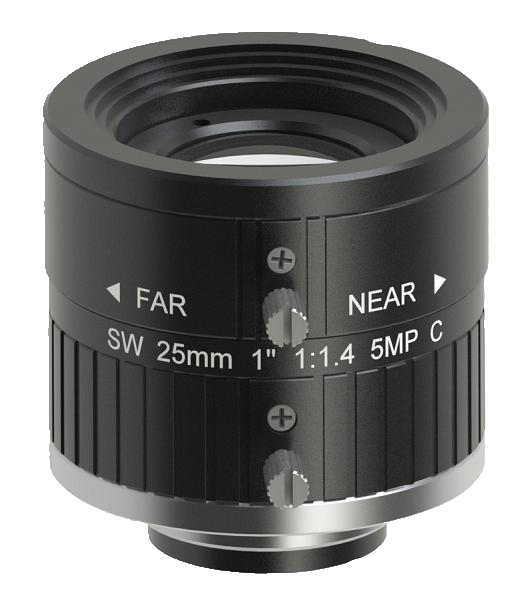
Choose a lens for your operating band and sensor format. Verify transmission, focus, and edge detail with the intended illumination, filters, and protective window in place.
Browse SWIR Lenses
Compare models with documented transmission and focus in your target infrared band. Confirm image coverage and sharpness at your working distance before choosing a lens.
Browse Infrared LensesUse these guides to check that the lens covers the active sensor area and test whether defects stand out consistently on representative samples. Then match the illumination, lens transmission, and sensor sensitivity to the wavelength band that gives the best contrast for your inspection.
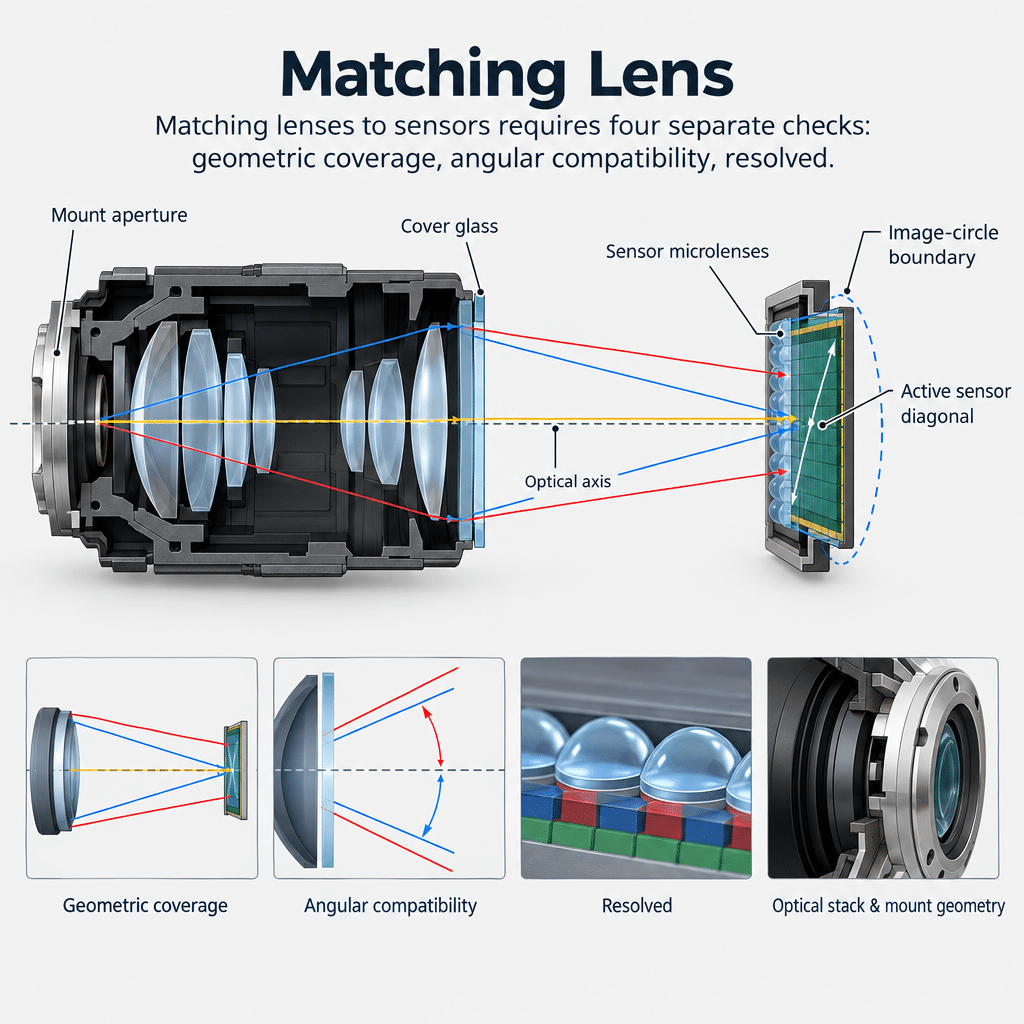
Check image-circle coverage and chief ray angle before pairing a lens with a sensor.
Read Guide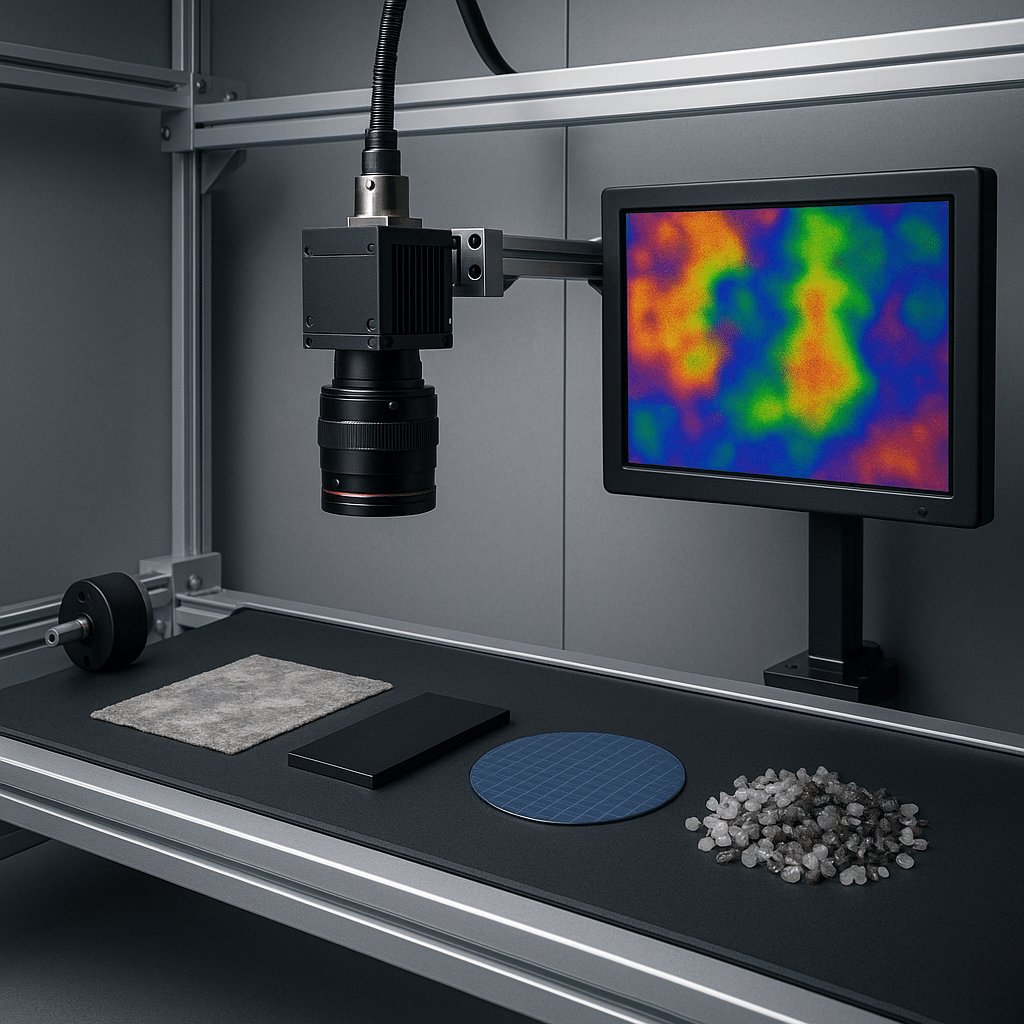
Test real samples for moisture and defect contrast before committing to a setup.
Read Guide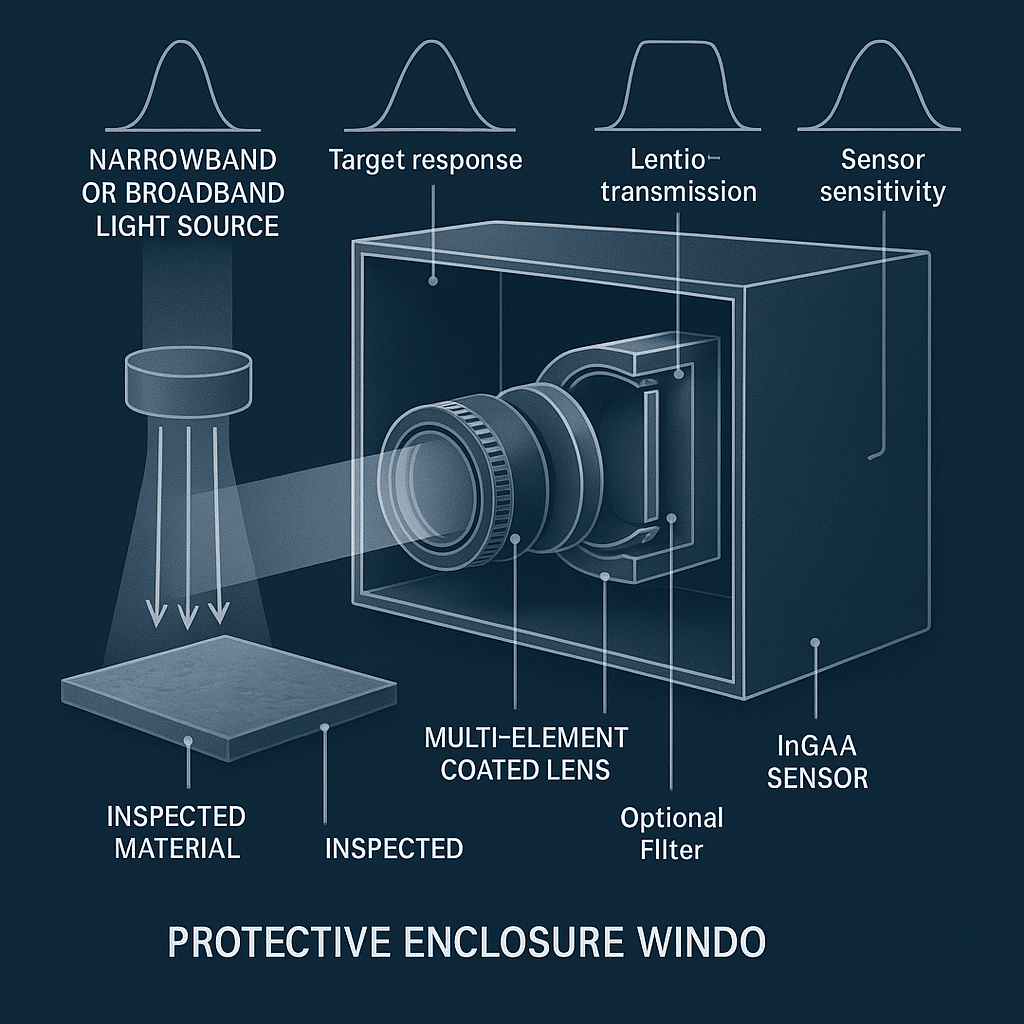
Match the sensor, lighting, and lens coatings to the operating wavelength band.
Read GuideBUYER QUESTIONS
Answers to common SWIR Inspection questions about choosing optics and verifying the finished setup.
No. Contrast depends on the material, wavelength, thickness, lighting, and sensor. Test samples with known differences first.
Compare bands on acceptable, borderline, and defective samples with the actual camera and optics.
Only if transmission, focus, and image quality are verified in your wavelength band and installation.
Check contrast and exposure at production speed, including edge uniformity and realistic surface reflections.
PROJECT INQUIRY
For SWIR Inspection, share the material, defect, candidate wavelengths, camera model, and operating speed. Include samples or comparable images where available.
Include a model number or the information currently available:
You do not need a complete optical specification to start. Send the information currently available, along with your delivery destination and preferred schedule.