

+86 591 8379 6881

Telecentric Lenses

SUPERIOR OPTICS / CATEGORY

Telecentric Lenses for Dimensional Inspection and Measurement

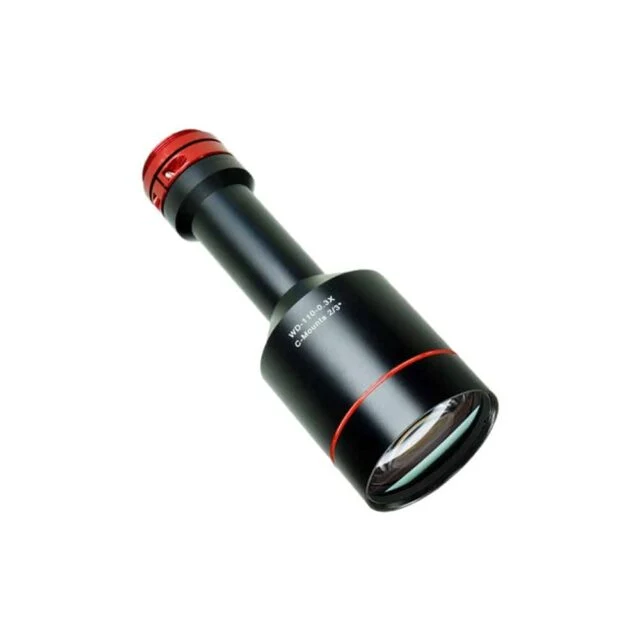
Telecentric lenses reduce perspective-related image-size changes within a specified object-depth range. SUPERIOR helps buyers review field of view, magnification, working distance, sensor coverage and telecentricity when selecting optics for dimensional inspection, electronics inspection and precision assembly. Evaluate lens performance alongside lighting, calibration and mechanical stability to meet your measurement requirements.

Telecentric Lenses product reference image

Explore and Filter Telecentric Lenses

Filter Lens Models
Mount
Mount

No rated values available.

Sensor Format
Sensor Format

No rated values available.

Required Magnification (x)
Minimum Image Circle (mm)
Maximum Stated F-Number
Clear All

Select multiple options within a field to match any; different fields combine. Choices appear only when model data is entered. Unknown values do not satisfy a selected specification. Resolution ratings require confirmation against sensor and pixel conditions. Focal length, wavelength and magnification must fall within the stated model range.

0 matching models

No models match these filters. Clear a condition or send your requirements for an engineering review.

Selection Checklist for Telecentric Lenses

Use these illustrative inputs to prepare your lens selection brief. This checklist is not a model specification or an interactive product filter. Confirm all values against the selected model data sheet, or request engineering selection support.

Selection Checklist for Telecentric Lenses
ParameterSelection example / inputVerification required
MagnificationExample: 0.5xSelect with the actual sensor dimensions and object field.
Sensor width and fieldExample: 12.8 mm sensor / 0.5 = 25.6 mm object widthAllow alignment and part-position margins.
Working distanceExample: 110 mm nominal requirementModel-specific distance and depth range must be confirmed.
Telecentricity and distortionProject-defined limits and field positionsRequest measurement method, conditions and data.
Depth and resolutionExample: +/-1 mm object depth variation for evaluationVerify contrast and measurement error over the required range.

Key Features and Advantages

  • Perspective Control for Measurement

    Object-space Telecentric Lenses help reduce apparent size changes caused by object-depth variation within the specified range. Review telecentricity and magnification stability for your part geometry rather than assuming the image size is constant at every distance.

  • Field of View & Magnification Matching

    Match sensor dimensions and lens magnification to the required object field of view. Confirm working distance, usable object-depth range and mounting space before choosing a camera and lens configuration.

  • Distortion & Edge Detail Evaluation

    Assess distortion, contrast and edge sharpness as separate performance criteria. Review model-specific data at the intended aperture, wavelength and working distance, then evaluate representative parts and a suitable calibration target.

  • Integration for Repeatable Inspection

    Coordinate lens selection with backlighting or front illumination, rigid mounting and calibration. Define measurement repeatability and accuracy at system level, including part positioning, temperature and image-processing behavior.

Manufacturing and Quality Control

Telecentric lenses evaluation require optical and mechanical checks at the specified magnification, working distance and object-depth range. Agree on telecentricity, distortion and image-quality criteria, and request applicable drawings, test conditions and inspection records before production approval.

  • Optical Performance Checks

    Review magnification, distortion, telecentricity and center-to-edge contrast under defined aperture and illumination conditions. Use a calibrated target and representative parts to evaluate image-size stability across the required object-depth range.

  • Mechanical & Mount Inspection

    Check the camera mount, barrel dimensions, lens support and mechanical reference surfaces against the approved drawing. Confirm sensor alignment, working-distance clearance and access for lighting, fixtures and calibration targets.

  • Assembly & Focus Verification

    Verify focus and image alignment with the intended camera, illumination and working distance. Check focus retention and assembly repeatability, then validate the complete measurement setup across the agreed part-position and depth variations.

  • Final Inspection & Traceability

    Review appearance, model identification, approved specification revision and protective packaging against project requirements. Request applicable inspection records and batch identification; distinguish lens inspection data from complete-system calibration results.

Request relevant drawings, test conditions and project-specific inspection evidence.

Technical Reference for Camera Evaluation

Camera specifications help define the imaging requirements for telecentric lenses selection. EMVA 1288 provides a framework for characterizing machine-vision sensors and cameras. Use the camera manufacturer’s published data alongside lens-specific checks for sensor coverage, chief ray angle and image quality.

Telecentric Lenses Applications

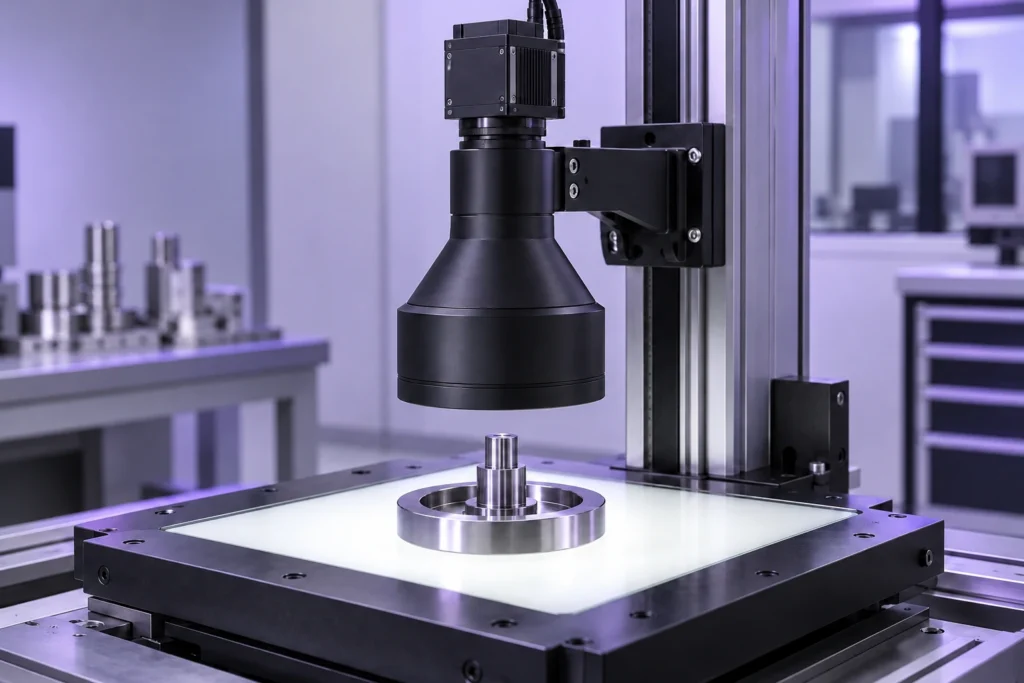
Evaluate representative parts using the required field of view, object-depth range and illumination geometry.

Illustrative telecentric lens above machined parts on a backlit dimensional gauging stage

Dimensional Gauging

Evaluate widths, diameters, spacing and edge positions on machined parts. Match field of view and magnification to the part, then validate depth sensitivity and measurement repeatability with a calibrated target and controlled backlighting.

Discuss Dimensional Gauging
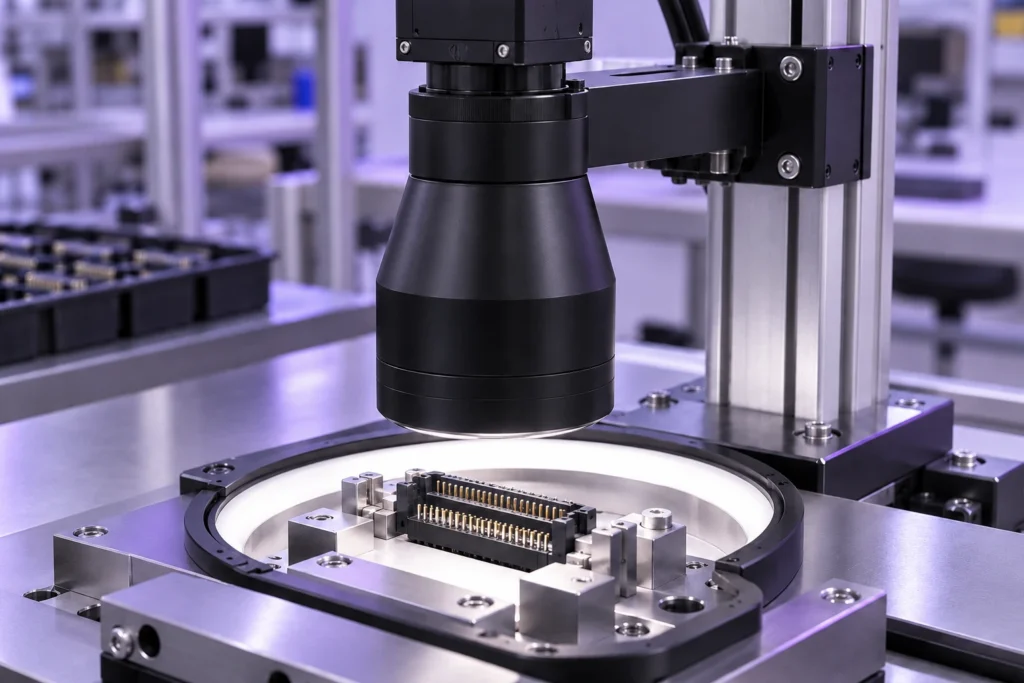
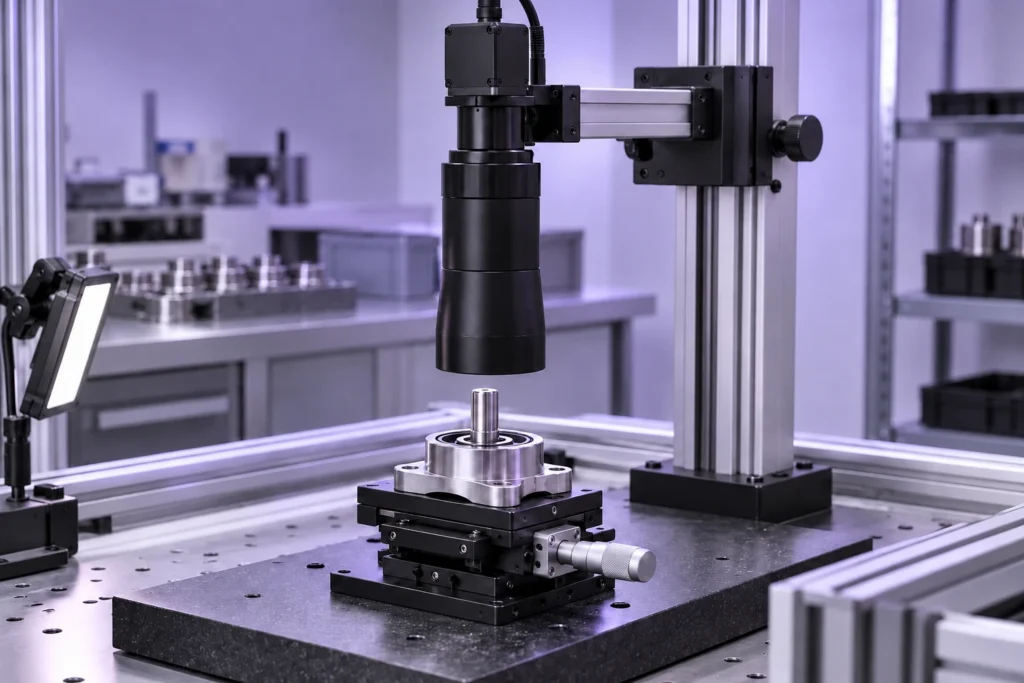
Illustrative telecentric inspection station above a precision bearing assembly fixture

Precision Assembly Alignment

Review part alignment, concentric features and assembly references within a defined viewing geometry. Combine telecentric optics with stable fixtures and suitable lighting, then evaluate positional variation and the complete system error budget.

Discuss Assembly Inspection

Illustrative application scenes.

Related Lenses & Engineering Support

Compare related lenses, review selection guidance or discuss a custom requirement.

BUYER QUESTIONS

Frequently Asked Questions

Answers to common selection and project questions.

Are telecentric lenses distortion-free?

No. Telecentricity describes ray geometry, while distortion describes field-dependent mapping error. Specify and evaluate both properties separately, then include residual errors and calibration in the system accuracy assessment.

Does telecentricity provide unlimited depth of field?

No. Perspective-related size stability and sharpness are different properties. Contrast and resolution still change with defocus. Validate the required depth range at the chosen aperture, illumination, and measurement conditions.

How do I choose magnification?

Divide the relevant sensor dimension by the required object field dimension. Verify both width and height, positioning margin, lens coverage, and the resolution required at the object before selecting a model.

What determines whether a telecentric lens will meet my accuracy target?

The complete system matters: lens performance, pixel size, illumination, calibration, mechanical stability, part presentation, and processing. Provide the error budget and test geometry so the lens can be assessed within that system.

PROJECT INQUIRY

Request a Project Review and Quote

Share the part drawing, sensor dimensions, required field of view, working distance, depth variation, and measurement error budget. Request a telecentric lens recommendation and project quotation.

Prepare Your Lens Inquiry

Include a model number or the information currently available:

  • Application and sensor details
  • Field of view, working distance and wavelength
  • Sample quantity or expected annual volume
  • Delivery destination and preferred schedule
Contact SUPERIOR

You do not need a complete optical specification to start. Send the information currently available, along with your delivery destination and preferred schedule.